Oil vs Anti-Seize on Bolts: When to Use Each (and When NOT To)
Anti-seize and oil both cut thread friction, so a dry torque spec over-tightens a lubricated bolt. When to use anti-seize vs oil, the copper/aluminum/nickel types, why lug nuts get torqued dry, and how much to reduce torque.
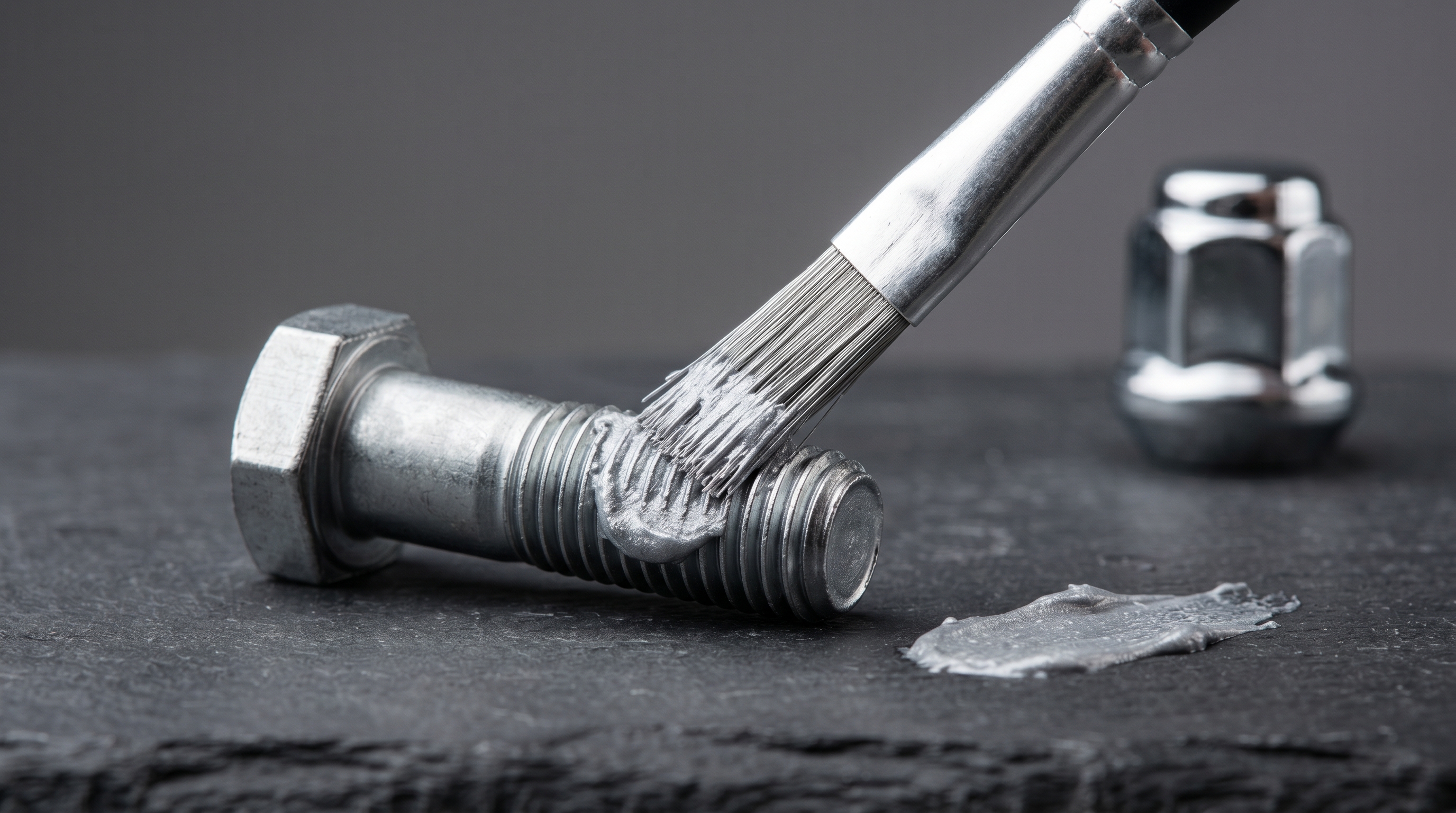
<h1>Oil vs Anti-Seize on Bolts: When to Use Each</h1>
<p>Reach for a tube of anti-seize or a drop of oil on a threaded fastener and you've changed the physics of that joint — whether you meant to or not. Thread lubricant isn't just insurance against rust; it changes how much of your torque actually becomes clamping force. Get it wrong and a good bolt ends up stretched, snapped, or backed out on the highway. This guide covers when to use anti-seize, when to use oil, which products to reach for, and the places you should use neither. When you need an exact figure, <a href="/">look up the bolt size and torque for your vehicle</a> before you start.</p>
<h2>The One Rule: Lubricant Lowers Friction, So Torque Clamps Harder</h2>
<p>When you tighten a bolt, only about 10% of your torque becomes clamp load — the rest is spent overcoming friction in the threads and under the bolt head. A torque spec is really a stand-in for a target tension, calculated around an assumed friction level (the "K" or nut factor).</p>
<h3>Why Lubrication Over-Tightens a Bolt</h3>
<ul>
<li><strong>Dry or zinc-plated bolt</strong>: nut factor of roughly K = 0.20 — the assumption behind most torque charts.</li>
<li><strong>Lubricated bolt</strong>: oil, grease, or anti-seize drops friction to about K = 0.18 or lower.</li>
<li><strong>The result</strong>: with less friction, more of the same torque turns into tension — so the dry number over-clamps a lubed bolt, sometimes far enough to yield or snap it.</li>
</ul>
<h3>How Much to Reduce Torque</h3>
<ul>
<li><strong>Light oil or anti-seize film</strong>: cut the dry value by roughly 10–20%.</li>
<li><strong>Heavier oils and greases</strong>: can call for more — follow the lubricant or fastener data.</li>
<li><strong>Always</strong>: use your manual's "wet" torque spec if it gives one.</li>
<li><strong>When the spec doesn't say</strong>: assume it was set for the as-received (lightly oiled) condition and don't pile extra lube on top without adjusting.</li>
</ul>
<h2>When to Use Anti-Seize</h2>
<p>Anti-seize is an assembly compound full of fine metal or mineral particles that stop threads from galling, seizing, and corrosion-welding — so the fastener still comes apart years later. Use it where heat, corrosion, or dissimilar metals would otherwise lock a fastener for good.</p>
<h3>Good Applications</h3>
<ul>
<li><strong>High-heat hardware</strong>: exhaust manifold studs, turbo bolts, O2-sensor bungs, header bolts.</li>
<li><strong>Stainless steel fasteners</strong>: stainless galls against itself almost predictably — anti-seize is essentially mandatory.</li>
<li><strong>Dissimilar metals</strong>: steel bolts into aluminum or magnesium castings, where galvanic corrosion seizes them.</li>
<li><strong>Brake hardware</strong>: caliper bracket bolts, slide-pin threads, and the hub face behind a rotor (never the friction surfaces).</li>
</ul>
<h3>Never Use Anti-Seize on Lug Nuts or Wheel Studs</h3>
<p>This is the big one. Most automakers specify a <strong>dry</strong> torque for wheel fasteners. Anti-seize lowers the friction, so the same torque now over-stretches the studs — and a wheel torqued "to spec" over slick threads can shear a stud or work loose. If your studs are rusty, clean them; don't lubricate them. Torque wheels dry unless your manufacturer explicitly says otherwise.</p>
<h2>The Three Anti-Seize Types to Know</h2>
<p>They are not interchangeable — the filler determines the temperature range and which metals it's safe against.</p>
<h3>Copper Anti-Seize</h3>
<ul>
<li><strong>Max temperature</strong>: about 1,100°C.</li>
<li><strong>Use it for</strong>: steel-on-steel, exhaust studs, bare-thread spark plugs, pipe fittings.</li>
<li><strong>Avoid on</strong>: aluminum threads (galvanic corrosion) and marine/salt environments.</li>
</ul>
<h3>Aluminum (Grey) Anti-Seize</h3>
<ul>
<li><strong>Max temperature</strong>: about 650°C.</li>
<li><strong>Use it for</strong>: general assembly, aluminum-to-aluminum joints, moderate temperatures. This is the typical "general purpose" tube.</li>
<li><strong>Avoid on</strong>: high-heat hardware like exhaust and turbo bolts.</li>
</ul>
<h3>Nickel Anti-Seize</h3>
<ul>
<li><strong>Max temperature</strong>: about 1,300°C.</li>
<li><strong>Use it for</strong>: stainless, dissimilar metals, marine/chloride, and very high heat. The safe pick when you're not sure.</li>
<li><strong>Avoid on</strong>: food-contact applications.</li>
</ul>
<h3>A Note on Spark Plugs</h3>
<p>Plenty of modern plugs (NGK, Denso and others) ship with a nickel or zinc-chromate coating, and the maker tells you <em>not</em> to add anti-seize — the coating already handles seizing, and extra compound changes the torque unpredictably. Bare-thread plugs in an older cast-iron head can take a thin film of copper anti-seize, and then you reduce the torque accordingly. When in doubt, follow the plug maker's instruction.</p>
<h2>When to Use Oil Instead</h2>
<p>Plain engine oil is an assembly lubricant, and the rule is simple: use it where the service manual tells you to. The classic cases are internal engine fasteners whose torque specs are written for oiled threads.</p>
<h3>Where Oil Is the Right Lubricant</h3>
<ul>
<li><strong>Torque-to-yield head bolts</strong>: almost always torqued with oiled threads and a final angle. See our <a href="/knowledge-hub/tty-bolts">guide to TTY bolts</a> for why you can't reuse them.</li>
<li><strong>Rod and main bearing bolts</strong>: specs assume clean oil on the threads and under the head.</li>
</ul>
<p>The key point: when a procedure says "lightly oil the threads," that torque value already accounts for the oil. Don't run it dry, and don't substitute grease or anti-seize — the friction won't match what the engineer assumed.</p>
<h2>Quick Reference</h2>
<ul>
<li><strong>Use anti-seize</strong>: heat, corrosion, stainless, dissimilar metals, and come-apart-later hardware.</li>
<li><strong>Use oil</strong>: only where the manual specifies it (head, rod, main bolts).</li>
<li><strong>Use neither (torque dry)</strong>: lug nuts and wheel studs, and any fastener with a dry spec you can't adjust.</li>
<li><strong>Always</strong>: reduce torque on lubricated threads and use a calibrated torque wrench.</li>
</ul>
<h2>Find the Exact Spec for Your Vehicle</h2>
<p>Don't guess. <a href="/">Look up the bolt size and torque</a> for your exact year, make, and model — free — and grab the printable torque chart so the right number is always within reach.</p>
<h2>Recommended Gear</h2>
<p>The compounds and tool referenced above. These are affiliate links — they cost you nothing extra and help keep WhatSizeBolt free.</p>
<ul>
<li><strong>Nickel anti-seize</strong>: the safe all-rounder for stainless, dissimilar metals, marine, and very high heat. <a href="https://www.amazon.com/s?k=nickel+anti-seize&tag=whatsizebol0a-20" rel="nofollow sponsored" target="_blank">View on Amazon</a></li>
<li><strong>Copper anti-seize</strong>: steel-on-steel and exhaust hardware up to about 1,100°C (not for aluminum). <a href="https://www.amazon.com/s?k=copper+anti-seize&tag=whatsizebol0a-20" rel="nofollow sponsored" target="_blank">View on Amazon</a></li>
<li><strong>1/2" torque wrench</strong>: the only way to hit a spec and apply the wet-thread reduction accurately. <a href="https://www.amazon.com/s?k=1%2F2+inch+torque+wrench&tag=whatsizebol0a-20" rel="nofollow sponsored" target="_blank">View on Amazon</a></li>
</ul>
<p><em>Affiliate disclosure: As an Amazon Associate, WhatSizeBolt earns from qualifying purchases. Product links above are tagged and marked rel="nofollow sponsored".</em></p>
<h2>Conclusion</h2>
<p>Thread lubricant is a tool, not a default. Anti-seize earns its place on hardware that fights heat, corrosion, and galling; oil belongs where the manual already assumes it; and wheel fasteners get torqued dry. The one habit that ties it all together: whenever you add a lubricant, lower the torque to match — and reach for the manufacturer's wet spec first.</p>
<p>When a job is safety-critical, confirm the figure against your service manual and tighten with a calibrated torque wrench. A few extra seconds of the right spec beats a stripped thread, a crushed gasket, or a wheel that comes loose down the road.</p>