When a Wrench Beats a Ratchet: Top Reasons (and Which Wrenches to Own)
Ratchets are faster — but a fixed wrench wins on clearance, brake/fuel lines, breakaway strength, and grip. The top times to reach for a wrench, plus the flare-nut, stubby, and ratcheting wrench types worth owning.
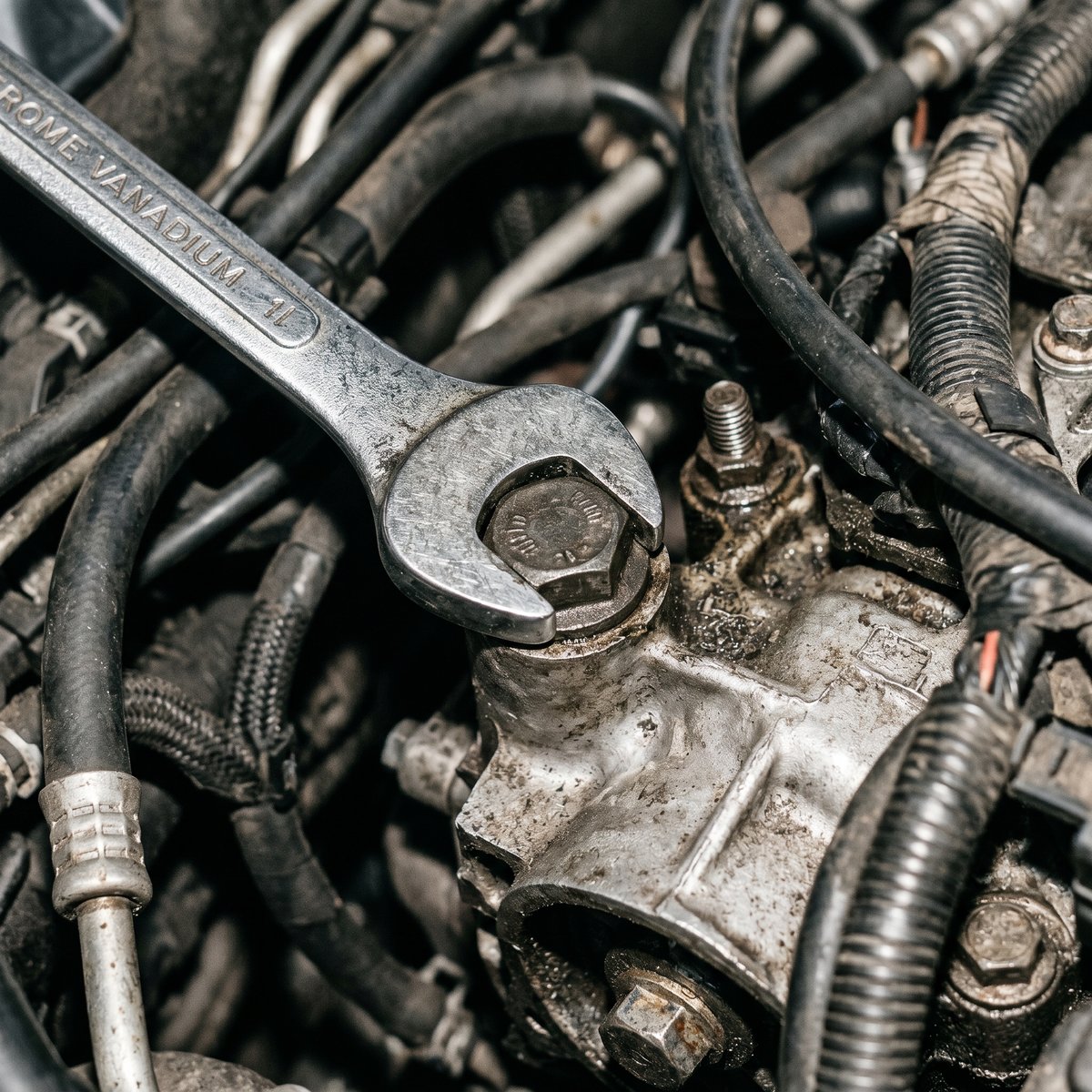
<p class="text-slate-700 mb-6">A good ratchet with a set of sockets is the fastest way to spin a fastener — so why does every working mechanic still carry a drawer full of plain wrenches, each one a fixed size, that you have to lift off and reseat after every few degrees of swing? Because speed isn't the only thing that matters at the bench. In a surprising number of real jobs, a fixed wrench is the <em>only</em> tool that physically works. Here are the top times you'll want a wrench over anything else — and the specific wrench types worth owning.</p>
<div class="flex gap-3 bg-amber-50 border border-amber-200 rounded-xl p-4 text-sm mb-6">
<svg xmlns="http://www.w3.org/2000/svg" viewBox="0 0 24 24" fill="none" stroke="currentColor" stroke-width="2" stroke-linecap="round" stroke-linejoin="round" class="h-5 w-5 text-amber-600 shrink-0 mt-0.5"><path d="m21.73 18-8-14a2 2 0 0 0-3.48 0l-8 14A2 2 0 0 0 4 21h16a2 2 0 0 0 1.73-3Z"></path><path d="M12 9v4"></path><path d="M12 17h.01"></path></svg>
<div><span class="font-bold text-amber-800">Final torque still needs a torque wrench.</span><span class="text-amber-700"> Hand wrenches are for breaking fasteners loose and snugging them down — not for setting a final spec. Always finish torque-critical fasteners with a calibrated torque wrench and check your vehicle's service manual.</span></div>
</div>
<h2 class="text-2xl font-bold text-slate-900 mb-2">Top reasons to grab a wrench over a ratchet</h2>
<p class="text-slate-600 text-sm mb-4">A ratchet wins on speed in open spaces. A fixed wrench wins everywhere the ratchet physically can't go — or where its mechanism becomes the weak link.</p>
<div class="overflow-x-auto rounded-xl border border-slate-200 mb-6">
<table class="w-full text-sm">
<thead><tr style="background-color:#01696F;color:#fff"><th class="text-left px-4 py-3 font-semibold">The situation</th><th class="text-left px-4 py-3 font-semibold">Why the ratchet struggles</th><th class="text-left px-4 py-3 font-semibold">Reach for</th></tr></thead>
<tbody>
<tr class="bg-white"><td class="px-4 py-3 font-semibold text-slate-800">Tight clearance</td><td class="px-4 py-3 text-slate-700">A socket plus a ratchet head is a tall, fat stack of steel that won't fit next to a casting or buried bolt.</td><td class="px-4 py-3 font-bold whitespace-nowrap" style="color:#01696F">Thin open-end / stubby</td></tr>
<tr class="bg-slate-50"><td class="px-4 py-3 font-semibold text-slate-800">Brake, fuel & AC lines</td><td class="px-4 py-3 text-slate-700">A socket is a closed circle — it can't pass over a line to reach the fitting.</td><td class="px-4 py-3 font-bold whitespace-nowrap" style="color:#01696F">Flare-nut (line) wrench</td></tr>
<tr class="bg-white"><td class="px-4 py-3 font-semibold text-slate-800">Seized / high-torque bolts</td><td class="px-4 py-3 text-slate-700">A ratchet's pawl is its weak point — it can slip or strip under a hard breakaway load.</td><td class="px-4 py-3 font-bold whitespace-nowrap" style="color:#01696F">Solid box-end / breaker bar</td></tr>
<tr class="bg-slate-50"><td class="px-4 py-3 font-semibold text-slate-800">Holding a nut while you turn the bolt</td><td class="px-4 py-3 text-slate-700">You physically need a second tool on the back side to stop it spinning.</td><td class="px-4 py-3 font-bold whitespace-nowrap" style="color:#01696F">A second combination wrench</td></tr>
<tr class="bg-white"><td class="px-4 py-3 font-semibold text-slate-800">Soft or rounded-prone fasteners</td><td class="px-4 py-3 text-slate-700">A worn 12-point socket can round the corners off under impact.</td><td class="px-4 py-3 font-bold whitespace-nowrap" style="color:#01696F">6-point box-end on the flats</td></tr>
</tbody>
</table>
</div>
<p class="text-slate-700 mb-6">There's also the unglamorous stuff: a fixed wrench has no moving parts to break, works caked in grit, costs a fraction of a ratchet, and gives you direct feel for how tight a fastener really is. The trade-off is the one the ratchet solved — in a cramped spot you turn a few degrees, lift the wrench, reseat it, and turn again. Slow, yes. But it's the price of reaching where nothing else fits.</p>
<img src="https://wmnmphhnejxoqlradebf.supabase.co/storage/v1/object/public/bolt-images/wrench-flarenut.jpg" alt="A flare-nut wrench gripping the flats of a brass tube-nut fitting on a steel brake line, where a closed socket cannot reach." style="width:100%;max-width:720px;height:auto;border-radius:8px" class="my-6" />
<h2 class="text-2xl font-bold text-slate-900 mb-2">The wrench types worth owning</h2>
<p class="text-slate-600 text-sm mb-4">If you're building a kit that covers the jobs a ratchet can't, start here. These are the four that earn their drawer space.</p>
<p class="text-xs text-slate-500 mb-4">As an Amazon Associate we earn from qualifying purchases. The links below are affiliate links (no extra cost to you).</p>
<div class="rounded-lg border my-6 bg-secondary/20 border-border/50 overflow-hidden shadow-sm">
<div class="p-5 sm:p-6">
<div class="flex items-start gap-3 mb-3">
<svg xmlns="http://www.w3.org/2000/svg" viewBox="0 0 24 24" fill="none" stroke="currentColor" stroke-width="2" stroke-linecap="round" stroke-linejoin="round" class="h-5 w-5 flex-shrink-0 mt-0.5" style="color:#01696F"><path d="M14.7 6.3a1 1 0 0 0 0 1.4l1.6 1.6a1 1 0 0 0 1.4 0l3.77-3.77a6 6 0 0 1-7.94 7.94l-6.91 6.91a2.12 2.12 0 0 1-3-3l6.91-6.91a6 6 0 0 1 7.94-7.94l-3.76 3.76z"></path></svg>
<div class="flex-1">
<div class="text-xs font-semibold uppercase tracking-wide text-slate-500 mb-1">Recommended Tool <span class="ml-1.5 normal-case font-normal">· brake & fuel lines</span></div>
<h3 class="font-bold text-base sm:text-lg leading-snug text-slate-900">Flare-nut (line) wrench set</h3>
</div>
</div>
<p class="text-sm text-slate-600 mb-4 pl-8">A near-closed ring with one small slot — it wraps five of the six flats of a soft brass tube nut for far more grip than an open-end, yet still slides over the line. The single tool that saves rounded brake-line fittings.</p>
<div class="pl-8"><a href="https://www.amazon.com/s?k=flare+nut+line+wrench+set&tag=whatsizebol0a-20" target="_blank" rel="nofollow sponsored noopener" class="inline-flex items-center justify-center rounded-md text-sm font-medium h-10 px-4 py-2" style="background-color:#01696F;color:#fff">Shop flare-nut wrenches on Amazon</a></div>
</div>
</div>
<div class="rounded-lg border my-6 bg-secondary/20 border-border/50 overflow-hidden shadow-sm">
<div class="p-5 sm:p-6">
<div class="flex items-start gap-3 mb-3">
<svg xmlns="http://www.w3.org/2000/svg" viewBox="0 0 24 24" fill="none" stroke="currentColor" stroke-width="2" stroke-linecap="round" stroke-linejoin="round" class="h-5 w-5 flex-shrink-0 mt-0.5" style="color:#01696F"><path d="M14.7 6.3a1 1 0 0 0 0 1.4l1.6 1.6a1 1 0 0 0 1.4 0l3.77-3.77a6 6 0 0 1-7.94 7.94l-6.91 6.91a2.12 2.12 0 0 1-3-3l6.91-6.91a6 6 0 0 1 7.94-7.94l-3.76 3.76z"></path></svg>
<div class="flex-1">
<div class="text-xs font-semibold uppercase tracking-wide text-slate-500 mb-1">Recommended Tool <span class="ml-1.5 normal-case font-normal">· tight clearance</span></div>
<h3 class="font-bold text-base sm:text-lg leading-snug text-slate-900">Stubby / low-profile combination wrench set</h3>
</div>
</div>
<p class="text-sm text-slate-600 mb-4 pl-8">Short handles and a thin head get into the spots a ratchet-and-socket stack is simply too tall for — alternators, bracket bolts, and anything jammed against a casting.</p>
<div class="pl-8"><a href="https://www.amazon.com/s?k=stubby+combination+wrench+set&tag=whatsizebol0a-20" target="_blank" rel="nofollow sponsored noopener" class="inline-flex items-center justify-center rounded-md text-sm font-medium h-10 px-4 py-2" style="background-color:#01696F;color:#fff">Shop stubby wrenches on Amazon</a></div>
</div>
</div>
<div class="rounded-lg border my-6 bg-secondary/20 border-border/50 overflow-hidden shadow-sm">
<div class="p-5 sm:p-6">
<div class="flex items-start gap-3 mb-3">
<svg xmlns="http://www.w3.org/2000/svg" viewBox="0 0 24 24" fill="none" stroke="currentColor" stroke-width="2" stroke-linecap="round" stroke-linejoin="round" class="h-5 w-5 flex-shrink-0 mt-0.5" style="color:#01696F"><path d="M14.7 6.3a1 1 0 0 0 0 1.4l1.6 1.6a1 1 0 0 0 1.4 0l3.77-3.77a6 6 0 0 1-7.94 7.94l-6.91 6.91a2.12 2.12 0 0 1-3-3l6.91-6.91a6 6 0 0 1 7.94-7.94l-3.76 3.76z"></path></svg>
<div class="flex-1">
<div class="text-xs font-semibold uppercase tracking-wide text-slate-500 mb-1">Recommended Tool <span class="ml-1.5 normal-case font-normal">· speed + access</span></div>
<h3 class="font-bold text-base sm:text-lg leading-snug text-slate-900">Ratcheting combination wrench set</h3>
</div>
</div>
<p class="text-sm text-slate-600 mb-4 pl-8">The best of both worlds for medium-torque work: a box end that ratchets in a tiny swing arc, so you keep the thin profile of a wrench without lifting and reseating every turn. Add a flex-head version for awkward angles.</p>
<div class="pl-8"><a href="https://www.amazon.com/s?k=ratcheting+combination+wrench+set&tag=whatsizebol0a-20" target="_blank" rel="nofollow sponsored noopener" class="inline-flex items-center justify-center rounded-md text-sm font-medium h-10 px-4 py-2" style="background-color:#01696F;color:#fff">Shop ratcheting wrenches on Amazon</a></div>
</div>
</div>
<div class="rounded-lg border my-6 bg-secondary/20 border-border/50 overflow-hidden shadow-sm">
<div class="p-5 sm:p-6">
<div class="flex items-start gap-3 mb-3">
<svg xmlns="http://www.w3.org/2000/svg" viewBox="0 0 24 24" fill="none" stroke="currentColor" stroke-width="2" stroke-linecap="round" stroke-linejoin="round" class="h-5 w-5 flex-shrink-0 mt-0.5" style="color:#01696F"><path d="M14.7 6.3a1 1 0 0 0 0 1.4l1.6 1.6a1 1 0 0 0 1.4 0l3.77-3.77a6 6 0 0 1-7.94 7.94l-6.91 6.91a2.12 2.12 0 0 1-3-3l6.91-6.91a6 6 0 0 1 7.94-7.94l-3.76 3.76z"></path></svg>
<div class="flex-1">
<div class="text-xs font-semibold uppercase tracking-wide text-slate-500 mb-1">Recommended Tool <span class="ml-1.5 normal-case font-normal">· everyday backbone</span></div>
<h3 class="font-bold text-base sm:text-lg leading-snug text-slate-900">Full combination wrench set (SAE + metric)</h3>
</div>
</div>
<p class="text-sm text-slate-600 mb-4 pl-8">One open end, one box end, the right size on every tool. This is the set you reach for to hold the back of a nut, to break a bolt loose with the box end, and to fit where no socket will. Buy SAE and metric so you always have the exact size.</p>
<div class="pl-8"><a href="https://www.amazon.com/s?k=combination+wrench+set+sae+metric&tag=whatsizebol0a-20" target="_blank" rel="nofollow sponsored noopener" class="inline-flex items-center justify-center rounded-md text-sm font-medium h-10 px-4 py-2" style="background-color:#01696F;color:#fff">Shop combination wrench sets on Amazon</a></div>
</div>
</div>
<h2 class="text-2xl font-bold text-slate-900 mb-2">Thin & low-profile wrenches: for gaps nothing else fits</h2>
<p class="text-slate-600 text-sm mb-4">Sometimes the obstacle isn't the length of the tool or the swing angle — it's the <em>thickness</em>. A standard wrench head is simply too tall to slip into a narrow gap: between two pulleys, behind a hub flange, or flat against a casting where the fastener sits in a shallow recess.</p>
<p class="text-slate-700 mb-6">That's where a thin-pattern wrench earns its place. Sold as low-profile, wafer, or obstruction wrenches, their heads are ground much thinner than a normal combination wrench, so they slide into spaces a regular wrench — and certainly a socket — can't enter. They trade some strength for that access, so reach for them to position and snug a fastener in a tight gap, not to break a seized one loose.</p>
<div class="rounded-lg border my-6 bg-secondary/20 border-border/50 overflow-hidden shadow-sm">
<div class="p-5 sm:p-6">
<div class="flex items-start gap-3 mb-3">
<svg xmlns="http://www.w3.org/2000/svg" viewBox="0 0 24 24" fill="none" stroke="currentColor" stroke-width="2" stroke-linecap="round" stroke-linejoin="round" class="h-5 w-5 flex-shrink-0 mt-0.5" style="color:#01696F"><path d="M14.7 6.3a1 1 0 0 0 0 1.4l1.6 1.6a1 1 0 0 0 1.4 0l3.77-3.77a6 6 0 0 1-7.94 7.94l-6.91 6.91a2.12 2.12 0 0 1-3-3l6.91-6.91a6 6 0 0 1 7.94-7.94l-3.76 3.76z"></path></svg>
<div class="flex-1">
<div class="text-xs font-semibold uppercase tracking-wide text-slate-500 mb-1">Recommended Tool <span class="ml-1.5 normal-case font-normal">· narrow gaps</span></div>
<h3 class="font-bold text-base sm:text-lg leading-snug text-slate-900">Thin / low-profile (obstruction) wrench set</h3>
</div>
</div>
<p class="text-sm text-slate-600 mb-4 pl-8">A ground-thin head slips into gaps a standard wrench is too fat for — behind hubs, between pulleys, and flat against castings. Keep a set next to your stubbies for the truly cramped jobs where even a low-profile ratchet won't fit.</p>
<div class="pl-8"><a href="https://www.amazon.com/s?k=thin+profile+low+profile+wrench+set&tag=whatsizebol0a-20" target="_blank" rel="nofollow sponsored noopener" class="inline-flex items-center justify-center rounded-md text-sm font-medium h-10 px-4 py-2" style="background-color:#01696F;color:#fff">Shop thin / low-profile wrenches on Amazon</a></div>
</div>
</div>
<div class="flex gap-3 bg-blue-50 border border-blue-200 rounded-xl p-4 text-sm mb-6">
<svg xmlns="http://www.w3.org/2000/svg" viewBox="0 0 24 24" fill="none" stroke="currentColor" stroke-width="2" stroke-linecap="round" stroke-linejoin="round" class="h-5 w-5 text-blue-600 shrink-0 mt-0.5"><circle cx="12" cy="12" r="10"></circle><path d="M12 16v-4"></path><path d="M12 8h.01"></path></svg>
<div><span class="font-bold text-blue-800">6-point vs 12-point box ends.</span><span class="text-blue-700"> A 12-point ring slips onto a hex head at twice as many angles — handy in tight quarters — and the bolt's six corners drop into six of the twelve points. A 6-point ring contacts the flats with more surface, so it grips harder and is less likely to round a tight or rusted fastener. Keep both.</span></div>
</div>
<img src="https://wmnmphhnejxoqlradebf.supabase.co/storage/v1/object/public/bolt-images/wrench-boxend.jpg" alt="A 12-point box-end wrench seated fully over a hex bolt head, the six corners of the bolt nesting into the twelve points of the ring." style="width:100%;max-width:720px;height:auto;border-radius:8px" class="my-6" />
<h2 class="text-2xl font-bold text-slate-900 mb-2">Frequently asked questions</h2>
<div class="space-y-5 mb-6">
<div><h3 class="font-bold text-slate-800 mb-1">If I can only buy one type of wrench, which should it be?</h3><p class="text-slate-600 text-sm">A full combination wrench set (open end on one side, box end on the other) in both SAE and metric. It covers the most jobs — holding nuts, breaking bolts loose, and reaching tight fittings.</p></div>
<div><h3 class="font-bold text-slate-800 mb-1">Why not just use an adjustable wrench for everything?</h3><p class="text-slate-600 text-sm">An adjustable jaw has play, and play rounds off corners. A correctly sized wrench grips the flats with no slop — that precision is the whole point of owning fixed sizes.</p></div>
<div><h3 class="font-bold text-slate-800 mb-1">Do I really need flare-nut wrenches?</h3><p class="text-slate-600 text-sm">If you ever touch brake, fuel, or AC lines, yes. The soft brass and steel tube nuts round off instantly under an open-end wrench; a flare-nut wrench wraps almost all the way around for the grip those fittings need.</p></div>
<div><h3 class="font-bold text-slate-800 mb-1">What about torque?</h3><p class="text-slate-600 text-sm">Use a wrench to break loose and run the fastener down, then switch to a calibrated torque wrench for the final spec. Look up the exact torque for your vehicle with the <a href="https://whatsizebolt.com/?utm_source=knowledgehub&utm_medium=article&utm_campaign=wrench_vs_ratchet" class="font-medium hover:underline" style="color:#01696F">free WhatSizeBolt lookup tool</a>.</p></div>
</div>
<h2 class="text-2xl font-bold text-slate-900 mb-2">Keep going</h2>
<div class="grid gap-3 sm:grid-cols-2 mb-6">
<div class="bg-white rounded-xl border border-slate-200 p-4 space-y-1.5">
<div class="font-semibold text-slate-800 text-sm">Lug Nut Torque Guide</div>
<div class="text-xs text-slate-500">Every vehicle's wheel torque, plus how to do it right.</div>
<div class="text-xs text-slate-500"><a href="https://whatsizebolt.com/blog/wheel-torque-specs-lug-nut-torque-guide/" class="hover:underline" style="color:#01696F">Read the guide →</a></div>
</div>
<div class="bg-white rounded-xl border border-slate-200 p-4 space-y-1.5">
<div class="font-semibold text-slate-800 text-sm">Essential Fastener Tools</div>
<div class="text-xs text-slate-500">The core kit for working with bolts and nuts.</div>
<div class="text-xs text-slate-500"><a href="https://whatsizebolt.com/blog/essential-fastener-tools/" class="hover:underline" style="color:#01696F">See the list →</a></div>
</div>
</div>
<p class="text-slate-700 mb-2">Bottom line: a ratchet is for speed. A wrench is for the jobs the ratchet physically can't reach — and a flare-nut or stubby wrench is sometimes the only tool that fits at all. Build the kit, and look up the exact size and torque for your vehicle before you turn a bolt.</p>