The 6 Sockets That Cover 90% of DIY Car Maintenance (and the 4 More for Trucks)
One 3/8"-drive ratchet and six sockets — 10, 12, 14, 17, 19, 21mm — handle roughly 90% of routine maintenance on the most common cars; trucks add 15, 16, 18, 22mm. Verified wrench sizes across 10 best-selling vehicles, the tools that bite first-timers, and the honest DIY-vs-shop math.
A professional mechanic earns every dollar of their labor rate — the lift, the diagnostic gear, the years of training, and a warranty on the work all cost real money. But labor runs $100–200 an hour whether the job is rebuilding a transmission or unscrewing one 14mm bolt. Front brake pads run $245–325 installed; the pads themselves are $30–60. A battery swap is $215–245 for ten minutes with a single wrench.
For anything complex, safety-critical, or diagnostic, a good shop is worth every cent. For the routine maintenance in between, though, the math gets interesting — because the overwhelming majority of those jobs are held together by a handful of metric fasteners. We pulled the verified wrench sizes for the most common DIY jobs across ten of the best-selling vehicles in America — Corolla, Camry, RAV4, Civic, CR-V, Accord, F-150, Silverado, Altima — and the list collapses to six sockets.
Quick answer: a 3/8"-drive ratchet plus six sockets — 10, 12, 14, 17, 19, and 21mm — covers oil changes, brake work, wheel swaps, and battery terminals on most Asian and domestic cars (roughly 90% of routine jobs). Trucks and domestic SUVs add four more: 15, 16, 18, and 22mm. Budget about $40 for the set, plus a torque wrench — and check your exact vehicle's specs before you start.
The 6-socket core set
What each socket actually does, from verified spec data across the ten most popular vehicles.
| Socket | What it does | Where we verified it |
|---|---|---|
| 10mm | Battery terminals, small covers, trim fasteners | Silverado battery terminal (10mm); universal across makes |
| 12mm | Brake caliper slide pins, small brackets | Corolla/Civic front slide pins (12mm) |
| 14mm | Oil drain plugs, caliper guide pins, general engine bolts | 7 of 10 vehicles checked use a 14mm drain plug (Corolla, Camry, RAV4, Civic, Accord…) |
| 17mm | Caliper bracket bolts, some drain plugs (Honda CR-V) | Corolla/Civic/CR-V front caliper brackets (17mm) |
| 19mm | Lug nuts — Honda/Acura | Civic, CR-V, Accord (19mm, 80 ft-lbs) |
| 21mm | Lug nuts — Toyota, Nissan, Ford | Corolla, Camry, RAV4, Altima (21mm, 76–80 ft-lbs); F-150 (21mm, 150 ft-lbs) |
Trucks & domestic SUVs: add these four
Bigger hardware, bigger sockets. If there's a body-on-frame vehicle in your driveway, the core six won't finish every job.
| Socket | What it does | Where we verified it |
|---|---|---|
| 15mm | GM oil drain plugs, transfer case plugs | Silverado drain plug (15mm, 18 ft-lbs) |
| 16mm | Ford oil drain plugs | F-150 drain plug (16mm, 25–30 ft-lbs) |
| 18mm | GM brake caliper bolts (torque-to-yield) | Silverado caliper mounting bolt (18mm, TTY — see warning below) |
| 22mm | Lug nuts — GM trucks | Silverado (22mm / 13⁄16", 140 ft-lbs) |
The three extra tools that bite first-timers
The socket set gets you 90% of the way. These three gotchas cover most of the remaining 10%.
The DIY math on routine jobs
National-average installed pricing (RepairPal / Kelley Blue Book / YourMechanic aggregates, AAA 2026 regional labor adjustment), vs. what the same job costs in parts. The gap is mostly labor — skilled, warranted labor, but labor you can supply yourself on the routine jobs.
| Job | Shop price (national avg) | DIY parts cost | Tools needed |
|---|---|---|---|
| Front brake pads | $245–325 | $30–60 | 12/14/17mm + torque wrench |
| Battery replacement | $215–245 | $120–200 (the battery itself) | 10mm |
| Tire rotation | ~$40 | Free | 19/21/22mm + jack stands |
| Oil change | $60–120 | $25–50 (oil + filter) | 14/15/16mm + filter wrench |
One honest caveat, and it matters: a shop visit buys more than the job itself — proper disposal of fluids, a warranty on the work, and a trained set of eyes that can spot a torn boot or a weeping seal you'd walk right past. The smart play isn't DIY instead of a mechanic; it's handling the routine stuff yourself and building a relationship with a good shop for everything above your comfort zone — diagnostics, alignments, internal engine work, and anything you're not 100% sure about.
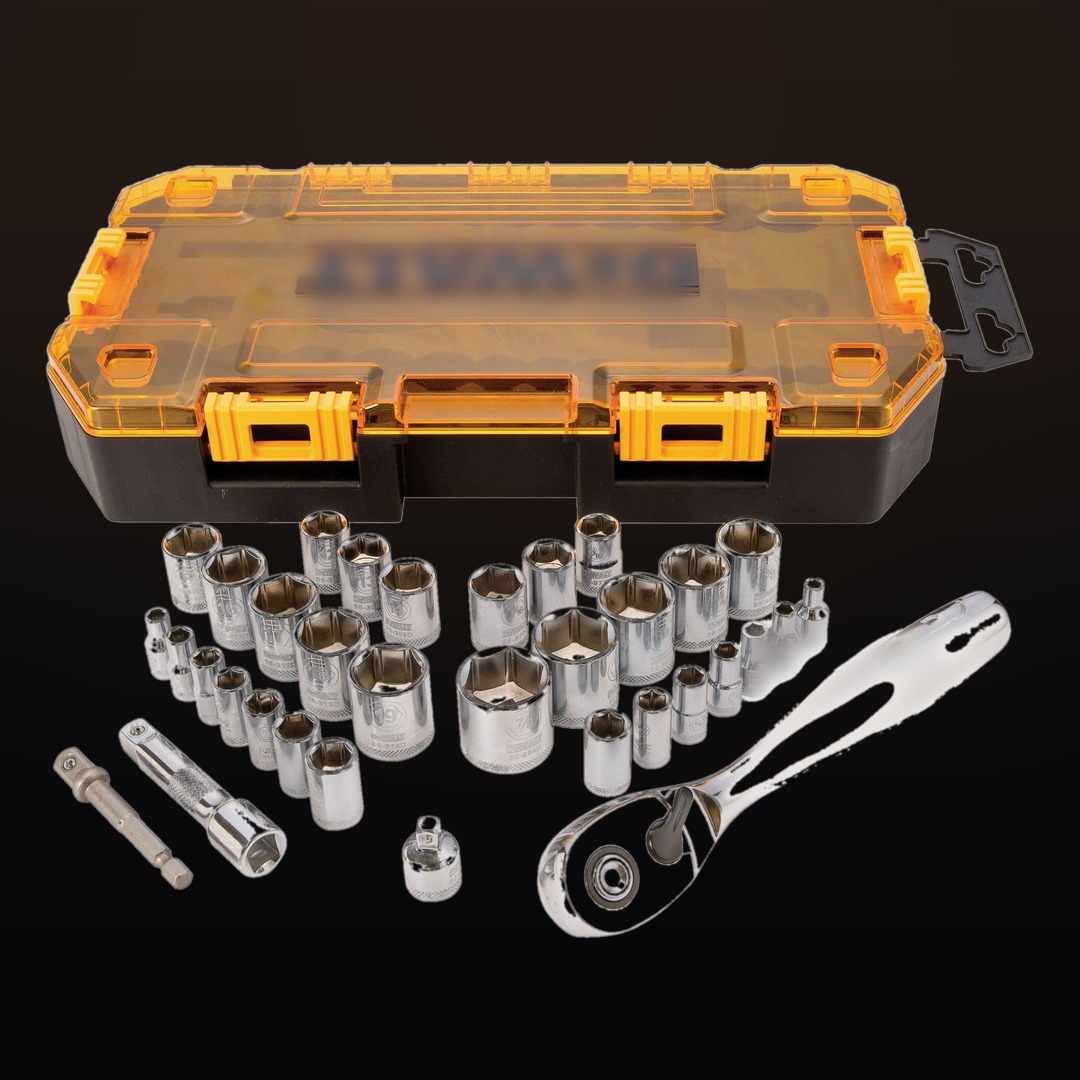
Metric Socket Set (6pt, 8–22mm) + Ratchet
Any reputable 3/8"-drive metric set covering 10–22mm includes every socket in this guide — look for 6-point sockets (they grip the flats, not the corners, and won't round a stuck drain plug). Skip the 200-piece kits; you need about ten sockets, not a suitcase.
As an Amazon Associate, WhatSizeBolt earns from qualifying purchases. Shop-price ranges are national averages from published RepairPal / KBB / YourMechanic aggregates with AAA 2026 regional labor adjustments — real quotes vary 10–25% by region and shop.
Frequently Asked Questions
Is a cheap socket set good enough for brake work?
For the fasteners in this guide, yes — brake pins and brackets don't demand premium steel. Spend your money on the torque wrench instead; that's the tool where accuracy actually changes the outcome.
Do I need deep sockets or shallow?
Both earn their keep, but if you're buying one set, go deep — lug nuts on long studs and filter housings need the depth, and deep sockets still work on everything shallow sockets do.
What about my European car?
VW, BMW, and Mercedes run Torx, E-Torx, and triple-square fasteners alongside metric hex — the 6-socket rule doesn't apply. Our vehicle lookup lists the exact fastener types for your model before you buy tools.
Should I stop going to my mechanic for this stuff?
Not necessarily — plenty of owners happily pay for the convenience, the warranty, and the inspection that comes with a shop visit, and that's a fair trade. The point of this guide isn't to replace your mechanic; it's that the choice is yours. Knowing the job only takes a 14mm socket is what makes it a real choice.
How do I find the torque spec for my exact vehicle?
Every spec in this article came from the WhatSizeBolt database — enter your year/make/model and the verified socket sizes and torque specs for your exact car are listed free, sourced from OEM service data. When in doubt, your owner's manual and a factory service manual are the final word.
Bottom line: one 3/8"-drive ratchet and six sockets — 10, 12, 14, 17, 19, 21mm — handle roughly 90% of routine maintenance on the most common cars; add 15, 16, 18, 22mm for trucks and domestic SUVs. The gap between shop prices and parts prices on routine jobs is mostly labor — skilled, warranted labor, but labor you can supply yourself with about $40 of tools. Torque every fastener to your vehicle's verified spec, know where the gotchas live (the Toyota filter cup, GM torque-to-yield bolts), and bring in a pro for anything past your comfort zone.