When a Wrench Beats a Ratchet: Top Reasons (and Which Wrenches to Own)
By WhatSizeBolt TeamEdited 5 min read
Ratchets are faster — but a fixed wrench wins on clearance, brake/fuel lines, breakaway strength, and grip. The top times to reach for a wrench, plus the flare-nut, stubby, and ratcheting wrench types worth owning.
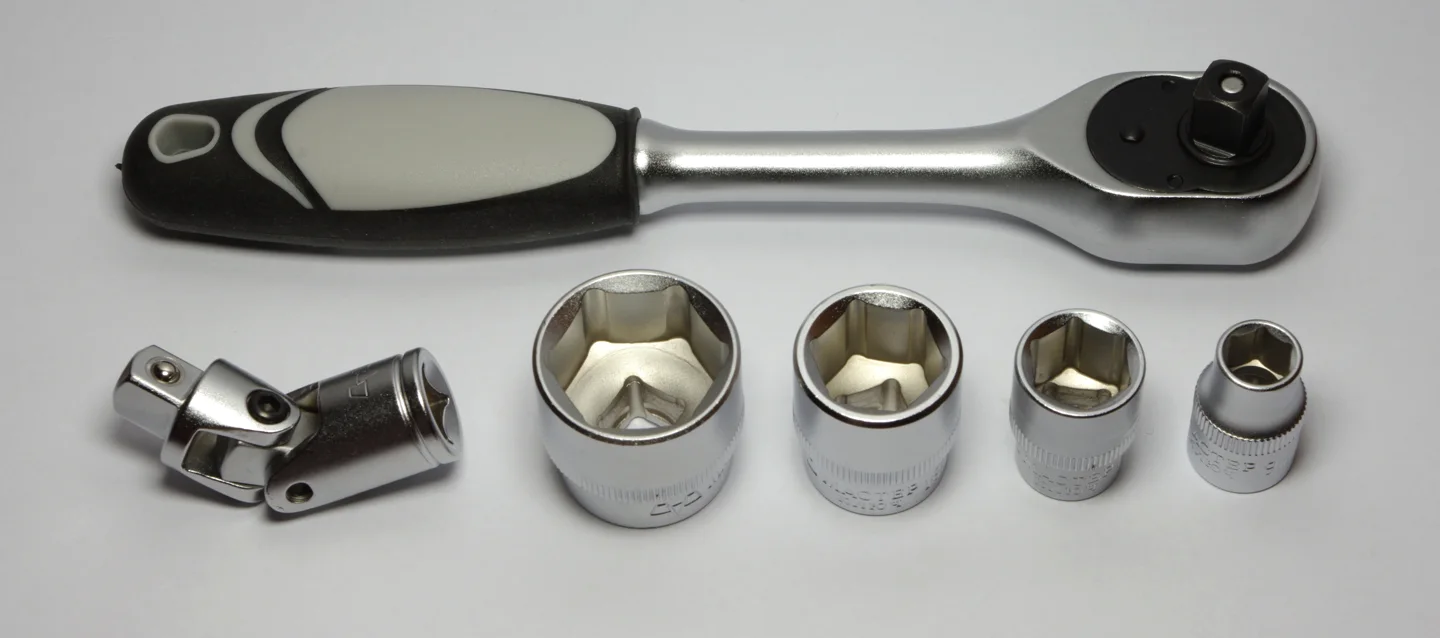
An ordinary ratchet and sockets, not a torque wrench.
Photo: Kae · CC BY-SA 3.0 · Resized without cropping for the article hero.
A good ratchet with a set of sockets is the fastest way to spin a fastener — so why does every working mechanic still carry a drawer full of plain wrenches, each one a fixed size, that you have to lift off and reseat after every few degrees of swing? Because speed isn't the only thing that matters at the bench. In a surprising number of real jobs, a fixed wrench is the only tool that physically works. Here are the top times you'll want a wrench over anything else — and the specific wrench types worth owning.
Top reasons to grab a wrench over a ratchet
A ratchet wins on speed in open spaces. A fixed wrench wins everywhere the ratchet physically can't go — or where its mechanism becomes the weak link.
| The situation | Why the ratchet struggles | Reach for |
|---|---|---|
| Tight clearance | A socket plus a ratchet head is a tall, fat stack of steel that won't fit next to a casting or buried bolt. | Thin open-end / stubby |
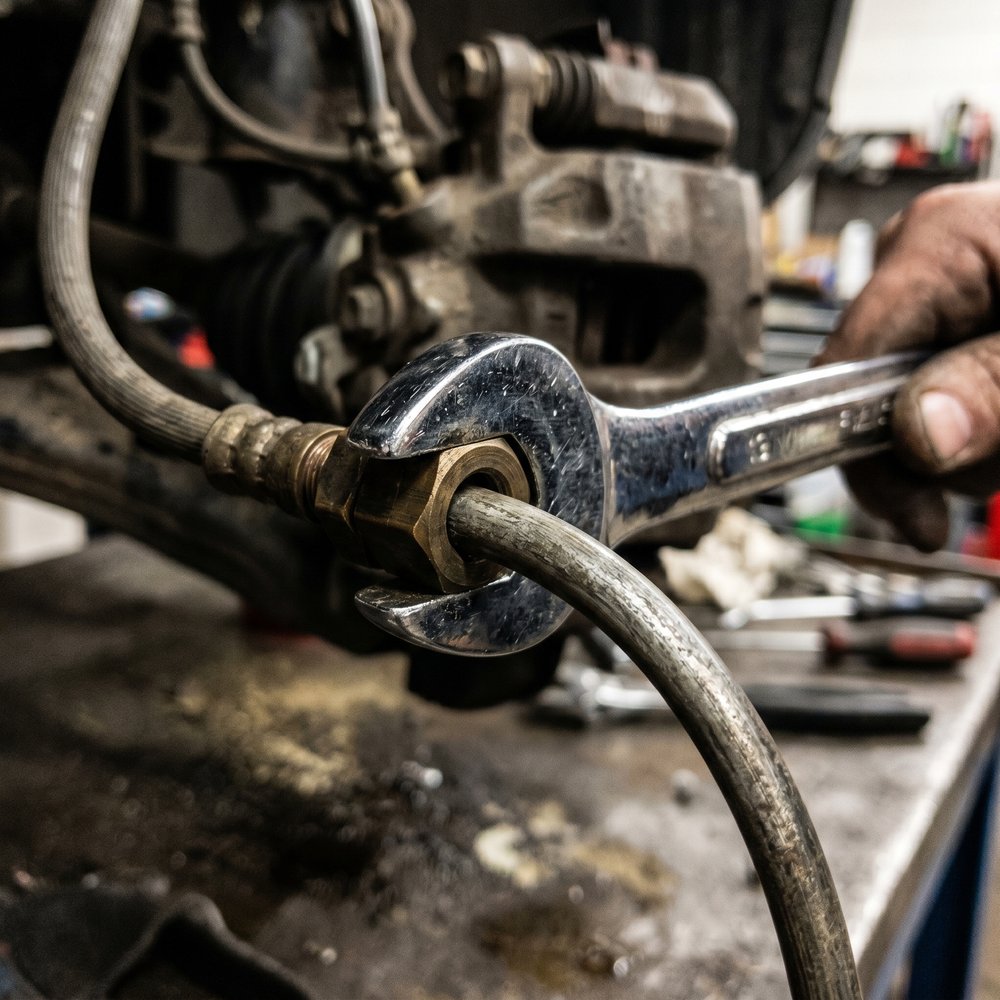
| Brake, fuel & AC lines | A socket is a closed circle — it can't pass over a line to reach the fitting. | Flare-nut (line) wrench |
| Seized / high-torque bolts | A ratchet's pawl is its weak point — it can slip or strip under a hard breakaway load. | Solid box-end / breaker bar |
| Holding a nut while you turn the bolt | You physically need a second tool on the back side to stop it spinning. | A second combination wrench |
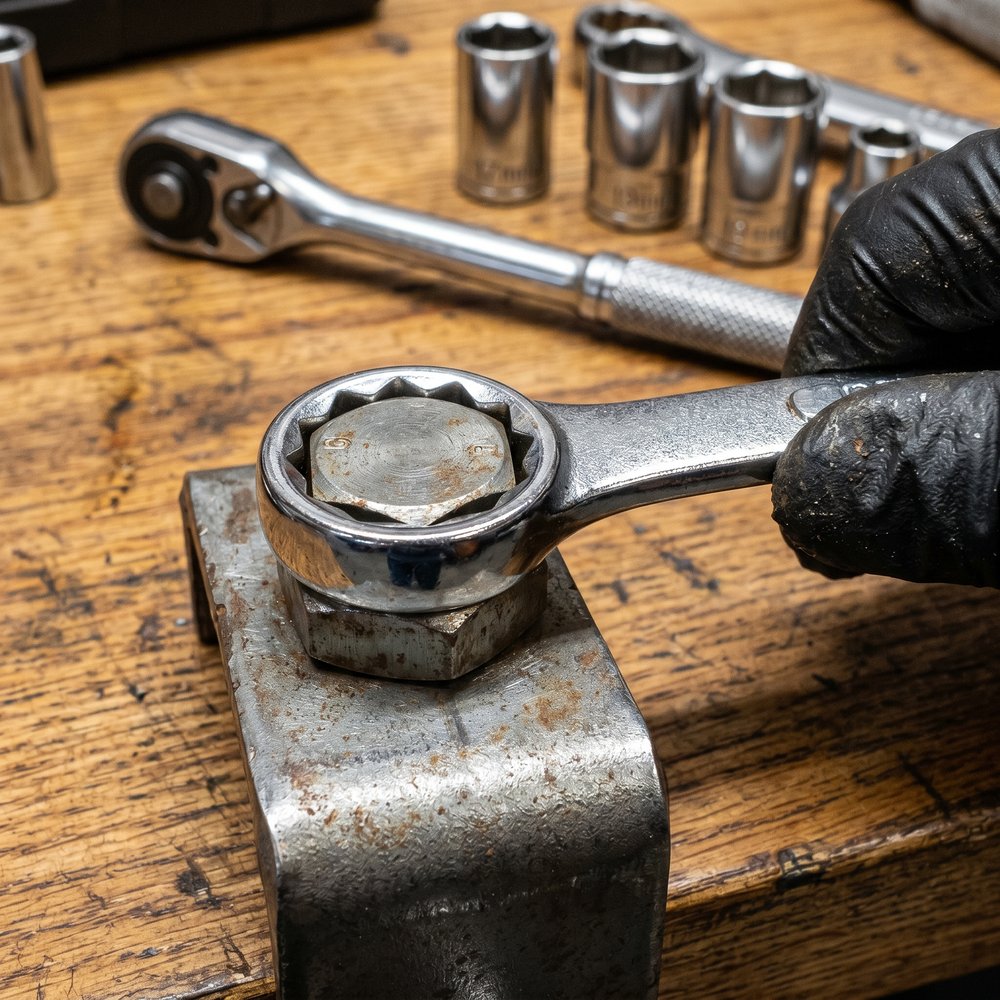
| Soft or rounded-prone fasteners | A worn 12-point socket can round the corners off under impact. | 6-point box-end on the flats |
There's also the unglamorous stuff: a fixed wrench has no moving parts to break, works caked in grit, costs a fraction of a ratchet, and gives you direct feel for how tight a fastener really is. The trade-off is the one the ratchet solved — in a cramped spot you turn a few degrees, lift the wrench, reseat it, and turn again. Slow, yes. But it's the price of reaching where nothing else fits.
The wrench types worth owning
If you're building a kit that covers the jobs a ratchet can't, start here. These are the four that earn their drawer space.
As an Amazon Associate we earn from qualifying purchases. The links below are affiliate links (no extra cost to you).
Flare-nut (line) wrench set
A near-closed ring with one small slot — it wraps five of the six flats of a soft brass tube nut for far more grip than an open-end, yet still slides over the line. The single tool that saves rounded brake-line fittings.
Stubby / low-profile combination wrench set
Short handles and a thin head get into the spots a ratchet-and-socket stack is simply too tall for — alternators, bracket bolts, and anything jammed against a casting.
Ratcheting combination wrench set
The best of both worlds for medium-torque work: a box end that ratchets in a tiny swing arc, so you keep the thin profile of a wrench without lifting and reseating every turn. Add a flex-head version for awkward angles.
Full combination wrench set (SAE + metric)
One open end, one box end, the right size on every tool. This is the set you reach for to hold the back of a nut, to break a bolt loose with the box end, and to fit where no socket will. Buy SAE and metric so you always have the exact size.
Thin & low-profile wrenches: for gaps nothing else fits
Sometimes the obstacle isn't the length of the tool or the swing angle — it's the thickness. A standard wrench head is simply too tall to slip into a narrow gap: between two pulleys, behind a hub flange, or flat against a casting where the fastener sits in a shallow recess.
That's where a thin-pattern wrench earns its place. Sold as low-profile, wafer, or obstruction wrenches, their heads are ground much thinner than a normal combination wrench, so they slide into spaces a regular wrench — and certainly a socket — can't enter. They trade some strength for that access, so reach for them to position and snug a fastener in a tight gap, not to break a seized one loose.
Thin / low-profile (obstruction) wrench set
A ground-thin head slips into gaps a standard wrench is too fat for — behind hubs, between pulleys, and flat against castings. Keep a set next to your stubbies for the truly cramped jobs where even a low-profile ratchet won't fit.
Frequently Asked Questions
If I can only buy one type of wrench, which should it be?
A full combination wrench set (open end on one side, box end on the other) in both SAE and metric. It covers the most jobs — holding nuts, breaking bolts loose, and reaching tight fittings.
Why not just use an adjustable wrench for everything?
An adjustable jaw has play, and play rounds off corners. A correctly sized wrench grips the flats with no slop — that precision is the whole point of owning fixed sizes.
Do I really need flare-nut wrenches?
If you ever touch brake, fuel, or AC lines, yes. The soft brass and steel tube nuts round off instantly under an open-end wrench; a flare-nut wrench wraps almost all the way around for the grip those fittings need.
What about torque?
Use a wrench to break loose and run the fastener down, then switch to a calibrated torque wrench for the final spec. Look up the exact torque for your vehicle with the free WhatSizeBolt lookup tool.
Keep going
Bottom line: a ratchet is for speed. A wrench is for the jobs the ratchet physically can't reach — and a flare-nut or stubby wrench is sometimes the only tool that fits at all. Build the kit, and look up the exact size and torque for your vehicle before you turn a bolt.

Video plays from YouTube when clicked. Always confirm torque values against your service manual.