A comprehensive guide to selecting the right fastener materials for your application. This guide covers material properties, corrosion resistance, strength considerations, and how to choose the perfect fastener for any environment.
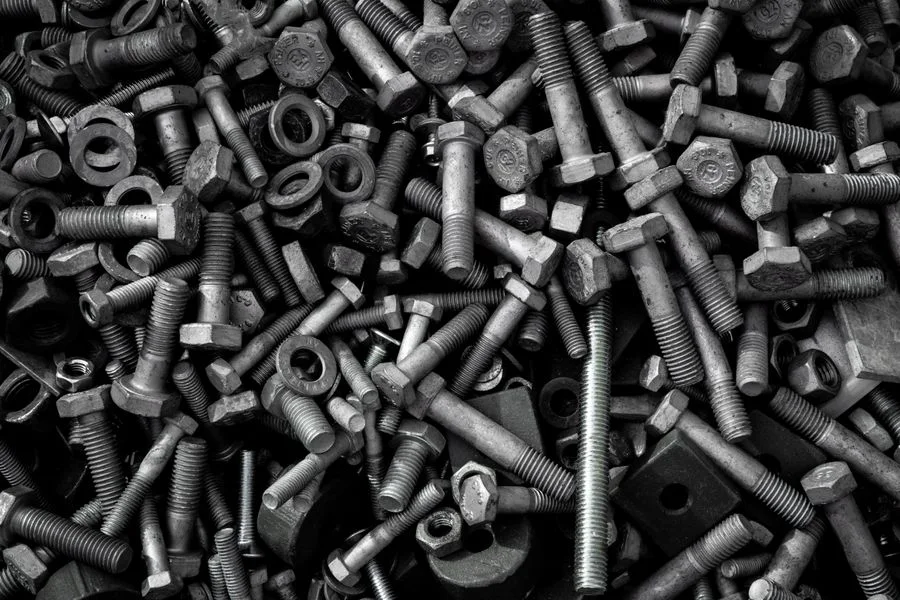
Assorted hardware for orientation; this photo does not identify a particular material, grade or OEM application.
A comprehensive guide to selecting the right fastener materials for your application. This guide covers material properties, corrosion resistance, strength considerations, and how to choose the perfect fastener for any environment.
Why Material Selection Matters
Performance Factors
Strength vs. Corrosion Resistance: Higher strength materials often sacrifice corrosion resistance
Temperature Range: Some materials perform better in extreme heat or cold
Cost vs. Longevity: More expensive materials may offer better long-term value
Environmental Compatibility: Material must withstand the operating environment
Common Failure Modes
Galvanic Corrosion: When dissimilar metals contact in the presence of an electrolyte
Stress Corrosion Cracking: Cracking under tensile stress in corrosive environments
Hydrogen Embrittlement: Loss of ductility in high-strength steels exposed to hydrogen
Temperature Degradation: Loss of strength at high temperatures
Marine: Must withstand salt water — 316 stainless, brass, or bronze
Chemical: Material must be compatible with specific chemicals present
Temperature Effects
High temperatures (>300°F/150°C): Alloy steel, stainless, titanium
Low temperatures (<-20°F/-29°C): Avoid carbon steels (can become brittle)
Cryogenic: Stainless 304L, 316L, or specialized alloys
Galvanic Corrosion
When two dissimilar metals contact in the presence of an electrolyte (like moisture), the less noble metal corrodes faster. Use this chart to select compatible materials:
Galvanic Series in Seawater
Most Noble (Cathodic)
→
Least Noble (Anodic)
Graphite
Magnesium
Titanium
Zinc
Stainless 316
Aluminum 1100
Copper
Cadmium
Brass
Carbon Steel
Bronze
Cast Iron
Silver
Lead
Gold
Rule: Metals close together on the list are generally compatible. The greater the distance, the higher the corrosion risk for the anodic (less noble) metal.
Space applications: Specialized alloys, titanium, stainless
Coating Options
Zinc Plating
Most common for carbon steel fasteners
Good corrosion resistance for indoor and mild outdoor use
Cost-effective: Economical protection
Use for: General purpose, automotive (non-critical), indoor equipment
Hot-Dip Galvanizing
Thick zinc coating for excellent corrosion resistance
Good for outdoor and marine applications
Note: Can fill threads, may require re-tapping
Use for: Construction, outdoor structures, agricultural equipment
Black Oxide
Mild corrosion resistance (requires oil for protection)
Decorative black finish
Use for: Automotive (non-critical), firearms, aesthetic applications
Chrome Plating
Excellent appearance and moderate corrosion resistance
Hard, durable surface
Use for: Automotive trim, decorative applications, tools
Phosphate Coating
Good base for paint or oil coating
Moderate corrosion resistance
Use for: Automotive undercoating, military applications
Ceramic Coating
Excellent high-temperature performance
Good corrosion resistance
Use for: Exhaust systems, high-performance automotive
Cost Considerations
Material Cost Comparison (Relative)
Material
Relative Cost
Best Value For
Carbon Steel
1.0
Indoor, general purpose
Alloy Steel
1.5-2.5
High-strength needs
Stainless 304
2.0-3.0
Corrosion resistance
Stainless 316
3.0-4.5
Marine, chemical
Brass
2.5-4.0
Electrical, marine
Bronze
3.0-5.0
Bearings, marine
Aluminum
1.5-2.5
Lightweight applications
Titanium
8.0-15.0
Performance applications
Total Cost of Ownership
Consider not just material cost, but:
Labor costs for replacement if fasteners fail
Downtime costs for equipment repairs
Safety costs of fastener failure
Maintenance costs over equipment life
Often, a more expensive material saves money long-term by preventing failures and reducing maintenance.
Frequently Asked Questions
Q: Can I use stainless steel and carbon steel together?
A: Not recommended. The carbon steel will corrode preferentially due to galvanic corrosion. If you must mix, insulate the metals or use a dielectric union.
Q: What's the difference between 18-8 and 304 stainless?
A: 18-8 is a grade designation (18% chromium, 8% nickel) that's essentially the same as 304 stainless. Both are equivalent for most applications.
Q: When should I use galvanized vs. stainless fasteners?
A: Galvanized is more economical for outdoor use where appearance isn't critical. Stainless is better when corrosion resistance is critical or for visible applications.
Q: Can I use aluminum fasteners with steel?
A: Not recommended due to galvanic corrosion. If you must, insulate the metals and use anti-seize compound.
Q: What's the strongest fastener material?
A: Titanium Grade 5 has the highest strength-to-weight ratio, but alloy steel Grade 12.9 has the highest absolute tensile strength.
What to put on the threads once you’ve picked the material
The failure this guide is really about — dissimilar metals seizing together — is prevented at assembly, not by material choice alone.
Some links below are Amazon affiliate links — as an Amazon Associate we may earn a small commission at no extra cost to you.
Recommended Tool · stop galling and galvanic seizure
Nickel anti-seize compound
Stainless against stainless galls and welds itself solid; stainless against aluminium corrodes galvanically. Nickel-based anti-seize is the one to use on both, and it is rated far hotter than the aluminium-based kind, so it also survives exhaust and brake hardware.