Oil vs Anti-Seize on Bolts: When to Use Each (and When NOT To)
Anti-seize and oil both cut thread friction, so a dry torque spec over-tightens a lubricated bolt. When to use anti-seize vs oil, the copper/aluminum/nickel types, why lug nuts get torqued dry, and how much to reduce torque.
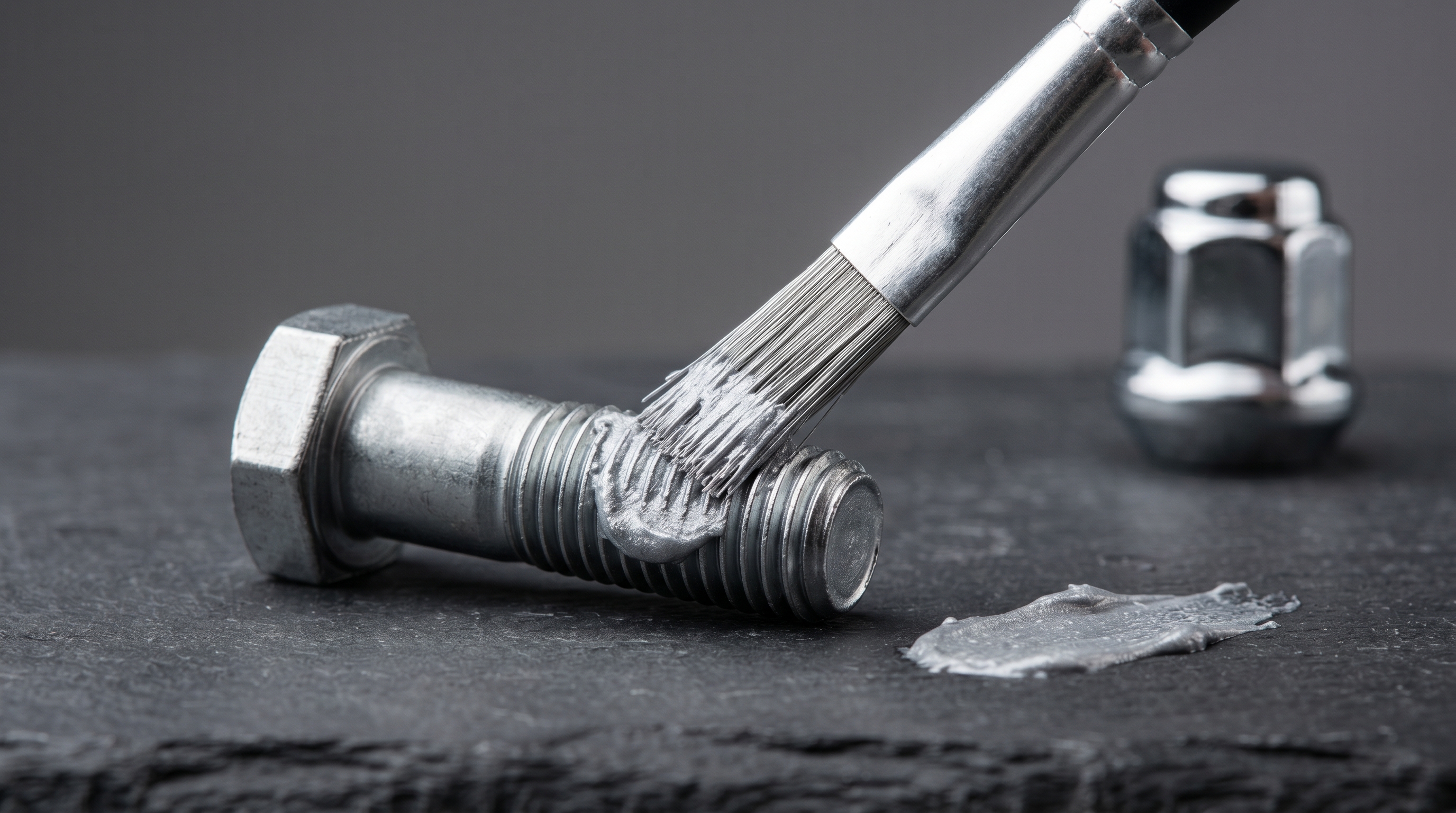
Reach for a tube of anti-seize or a drop of oil on a threaded fastener and you’ve changed the physics of that joint — whether you meant to or not. Thread lubricant isn’t just rust insurance; it changes how much of your torque becomes clamping force. Get it wrong and a good bolt ends up stretched, snapped, or backed out on the highway. When you need an exact figure, look up the bolt size and torque for your vehicle before you start.
The one rule: lubricant lowers friction, so torque clamps harder
A torque number is really a stand-in for a target tension, calculated around an assumed friction level.
When you tighten a bolt, only about 10% of your torque becomes clamp load — the rest is spent overcoming friction in the threads and under the head. Charts assume a friction level (the “K” or nut factor); change the friction and you change the tension you get from the same torque.
| Thread condition | Nut factor K | What it means |
|---|---|---|
| Dry / zinc-plated | ~0.20 | The baseline most torque charts are built around |
| Lubricated (oil, grease, anti-seize) | ~0.18 or lower | Same torque → more tension, so the dry number over-clamps |
When to use anti-seize
An assembly compound full of fine metal/mineral particles that stop galling, seizing and corrosion-welding.
- High-heat hardware — exhaust manifold studs, turbo bolts, O2-sensor bungs, header bolts.
- Stainless steel fasteners — stainless galls against itself almost predictably; anti-seize is essentially mandatory.
- Dissimilar metals — steel bolts into aluminium or magnesium castings, where galvanic corrosion seizes them.
- Brake hardware — caliper bracket bolts, slide-pin threads, the hub face behind a rotor (never the friction surfaces).
The three anti-seize types to know
Not interchangeable — the filler sets the temperature range and which metals it’s safe against.
| Type | Max temp | Use it for | Avoid on |
|---|---|---|---|
| Copper | ~1,100°C | Steel-on-steel, exhaust studs, bare-thread plugs, pipe fittings | Aluminium threads; marine/salt |
| Aluminium (grey) | ~650°C | General assembly, aluminium-to-aluminium, moderate heat | High-heat exhaust/turbo bolts |
| Nickel | ~1,300°C | Stainless, dissimilar metals, marine, very high heat (the safe pick) | Food-contact applications |
When to use oil instead
Plain engine oil is an assembly lubricant — use it where the service manual tells you to.
- Torque-to-yield head bolts — almost always torqued with oiled threads and a final angle. See our guide to TTY bolts for why you can’t reuse them.
- Rod and main bearing bolts — specs assume clean oil on the threads and under the head.
Quick reference
Three buckets, one habit.
| Situation | What to use |
|---|---|
| Heat, corrosion, stainless, dissimilar metals, come-apart-later | Anti-seize (matched to temp/metal) |
| Head, rod, main bolts (where the manual specifies) | Oil |
| Lug nuts & wheel studs, or any dry spec you can’t adjust | Neither — torque dry |
| Any time you add lubricant | Reduce the torque and use a calibrated wrench |
Some links below are Amazon affiliate links — as an Amazon Associate we may earn a small commission at no extra cost to you.
Nickel anti-seize
Handles stainless, dissimilar metals, marine and very high heat — the one to reach for when you’re not sure which filler you need.
Copper anti-seize
Good to about 1,100°C for exhaust studs, pipe fittings and bare-thread plugs in iron heads. Keep it off aluminium.
1/2" torque wrench
The only way to apply a torque value — and the 10–20% lubricated-thread reduction — accurately.
Frequently asked questions
Do I reduce torque when I use anti-seize?
Yes. Anti-seize lowers thread friction, so the same torque produces more clamp load. Cut a dry spec by roughly 10–20% (more for heavy compounds), or use the manufacturer’s “wet” figure if one is given.
Can I put anti-seize on lug nuts?
No. Wheel fasteners are almost always a dry torque spec; anti-seize over-stretches the studs and a wheel can shear a stud or work loose. Clean rusty studs rather than lubricating them, and torque dry unless the maker says otherwise.
Which anti-seize for exhaust bolts and spark plugs?
Copper (good to ~1,100°C) suits steel exhaust hardware. For spark plugs, check the box first — most coated modern plugs should go in dry; only bare-thread plugs in iron heads take a thin copper film, with reduced torque.
Copper vs aluminium vs nickel — what’s the difference?
Mainly temperature range and metal compatibility: aluminium (~650°C) for general/aluminium work, copper (~1,100°C) for steel and exhaust but not aluminium, and nickel (~1,300°C) for stainless, dissimilar metals and marine.
Should I oil head bolts before torquing?
Only if the service manual specifies it — and many head bolts are torque-to-yield, torqued with oiled threads to a value plus a final angle, then replaced on reassembly. Follow the procedure exactly; the torque already assumes the oil.
Keep going
Bottom line: thread lubricant is a tool, not a default. Anti-seize earns its place on hardware that fights heat, corrosion and galling; oil belongs where the manual already assumes it; and wheel fasteners get torqued dry. Whenever you add lubricant, lower the torque to match — and reach for the manufacturer’s wet spec first.