British Thread Standards Explained: BSW, BSF, BA, BSP & BSC
By WhatSizeBolt TeamEdited 17 min read
The complete guide to the British fastener system - BSW, BSF, BA, BSP and Cycle threads. Where they came from, how each differs, and how to identify and match them on vintage machinery, motorcycles, and classic cars.
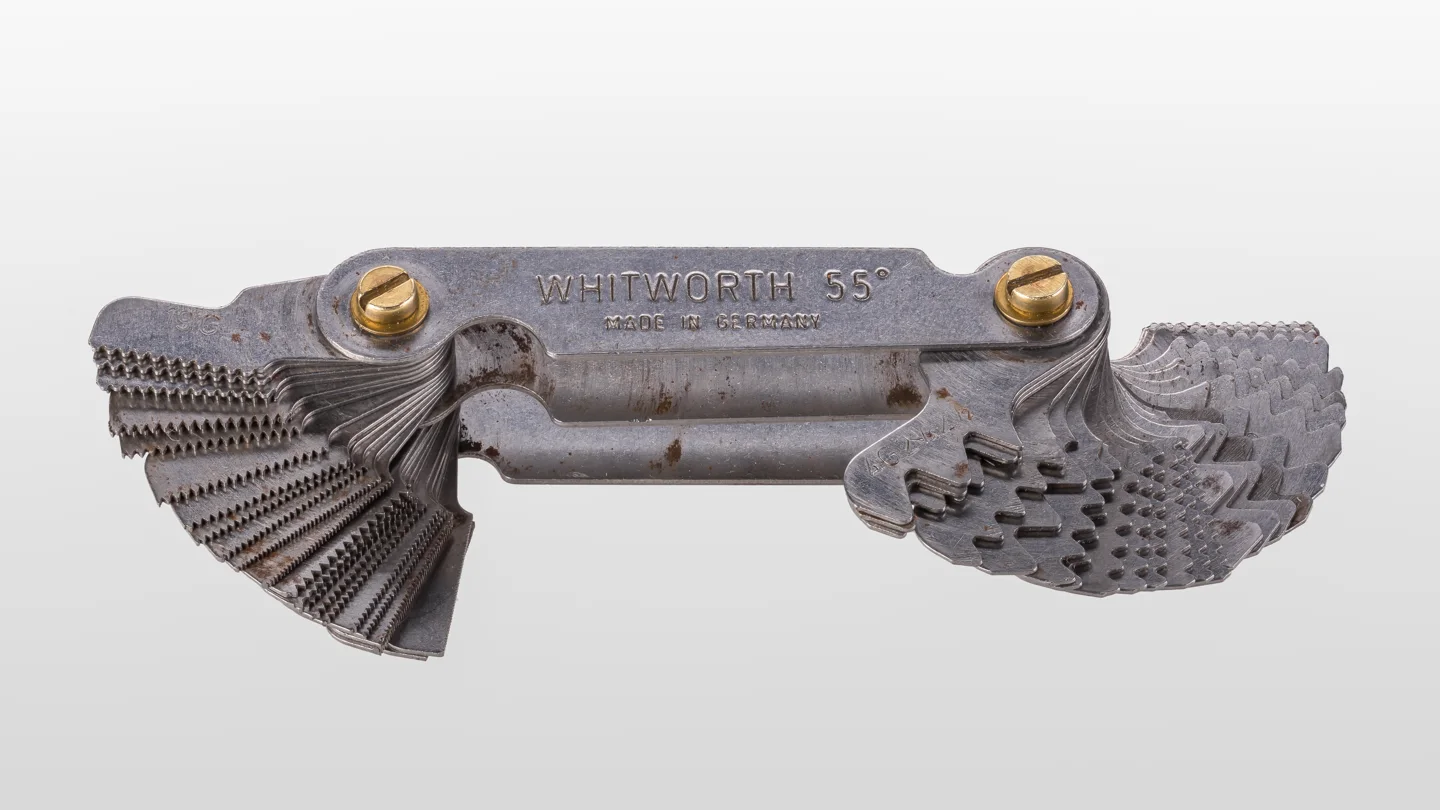
The gauge itself is shown, not a bolt being measured.
Photo: CEphoto, Uwe Aranas · CC BY-SA 3.0 · Resized without cropping for the article hero.
If you have ever pulled a bolt out of a pre-1970s British car, a Norton or Triumph motorcycle, an old lathe, or a piece of antique machinery and found that nothing in your metric or SAE kit fit it, you have almost certainly met a British Standard thread. These threads are the direct descendants of the work of Sir Joseph Whitworth, and for the better part of a century they were the fastener language of the industrialized world.
Whitworth was the first coarse thread; but it was never alone. Around it grew an entire family of related standards — a fine-pitch series, a tiny-instrument series, dedicated pipe threads, and a cycle-specific series — each solving a problem the original coarse thread could not. Understanding that family is the key to working on almost anything British and old.
We will cover the history, the precise geometry of each thread, how they relate to one another, and — most importantly for anyone holding a mystery bolt — how to tell them apart and find replacements.
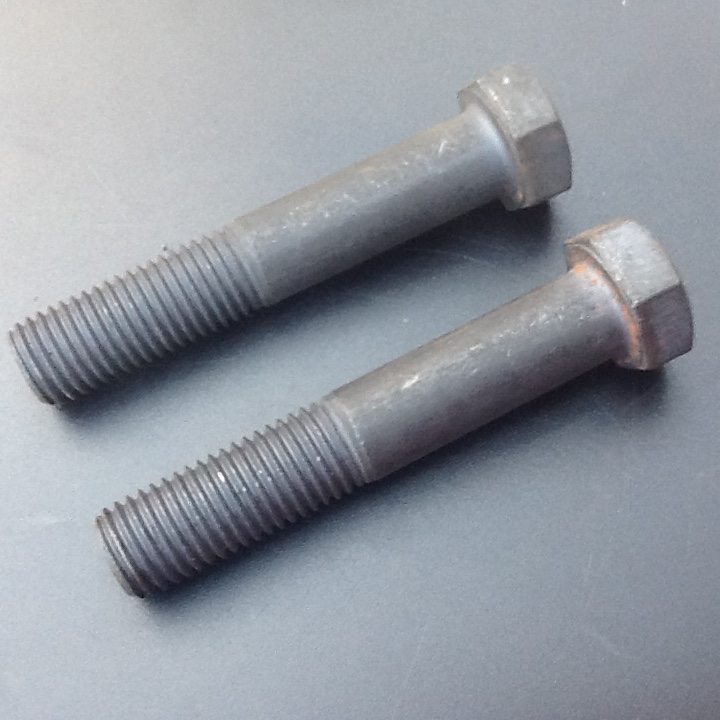
BSW and BSF fasteners — the coarse and fine Whitworth-family bolts found throughout pre-1970s British machinery and vehicles.
A quick recap: why Whitworth mattered
Before 1841, screw threads were chaos. Every workshop cut its own threads to its own pattern, so a nut made in one factory would rarely fit a bolt made in another. A broken fastener often meant hand-making a replacement.
Joseph Whitworth, a Manchester engineer with an almost obsessive commitment to precision, collected sample bolts from workshops across England and proposed a single national standard. His British Standard Whitworth (BSW) thread, introduced in 1841, fixed two things that define the entire British system to this day:
- A 55-degree thread flank angle. Where the later American and metric systems settled on a 60-degree angle, Whitworth chose 55 degrees. This single number is the genetic marker of nearly every British thread that followed.
- Rounded crests and roots. Instead of sharp peaks and valleys, the Whitworth form rounds off both the top (crest) and bottom (root) of the thread with a defined radius. This makes the thread stronger in fatigue and more tolerant of the manufacturing methods of the era.
Here is the Whitworth thread form compared with the 60-degree form used by metric and Unified threads:
That 5-degree difference looks trivial on paper, but it is exactly why a 60-degree thread and a 55-degree thread of nominally similar size will feel like they almost fit, then bind and gall. The flanks simply do not seat against each other. This is the single most common way people destroy vintage British threads — by forcing a close-but-wrong metric or SAE fastener into them.
With that foundation, let us meet the rest of the family.
The British thread family at a glance
Five standards share the British name — but not all share the same angle.
| Standard | Full name | Flank angle | Role | Typical use today |
|---|---|---|---|---|
| BSW | British Standard Whitworth | 55° | Original coarse thread | Vintage cars, machinery, structural bolts |
| BSF | British Standard Fine | 55° | Fine-pitch counterpart to BSW | Automotive, motorcycles, vibration-prone joints |
| BA | British Association | 47.5° | Small/instrument threads | Electrical, instruments, model engineering |
| BSP | British Standard Pipe | 55° | Pipe and fluid fittings | Plumbing, hydraulics, fuel/oil lines |
| BSC / CEI | British Standard Cycle | 60° | Cycle and motorcycle thread | Bicycles, classic British motorcycles |
Note the two oddballs: BA uses a 47.5-degree angle, not 55, because it was derived from a Swiss/continental system rather than from Whitworth directly. And BSC (Cycle) actually uses a 60-degree angle despite being thoroughly British. Everything else in the family carries the 55-degree Whitworth DNA. We will return to these exceptions — they matter enormously for identification.
BSW — British Standard Whitworth (the coarse original)
The backbone of the system, introduced in 1841 and the standard that built Britain's railways.
BSW is the thread Whitworth defined in 1841 and the backbone of the system. It is a coarse thread, meaning relatively few threads per inch (TPI) for a given diameter, with deep, strong, widely-spaced threads.
Key characteristics:
- 55-degree flank angle, rounded crests and roots.
- Sized by nominal diameter in inches (e.g. 1/4", 3/8", 1/2") with a fixed TPI for each size.
- Coarse pitch makes it fast to assemble, tolerant of dirt and damage, and ideal for softer materials and structural work.
Common BSW sizes and their TPI:
| Nominal size | TPI |
|---|---|
| 1/8" | 40 |
| 3/16" | 24 |
| 1/4" | 20 |
| 5/16" | 18 |
| 3/8" | 16 |
| 7/16" | 14 |
| 1/2" | 12 |
| 5/8" | 11 |
| 3/4" | 10 |
| 7/8" | 9 |
| 1" | 8 |
BSW remained the standard structural and general-engineering thread in Britain until metrication, and you will find it everywhere on older machinery, plant, and the chassis hardware of vintage vehicles.

A Whitworth combination spanner set — one set covers a BSW bolt and the BSF bolt one size up, not a BSF bolt of the same nominal diameter.
British Whitworth BSW Combination Wrench Set
Covers chassis, engine, and accessory fasteners on vintage British cars and motorcycles. Dual-marked sets cover both BSW and BSF in one tool.
BSF — British Standard Fine (the vibration fighter)
Same Whitworth form, finer pitch — the thread that the automobile industry demanded.
As engineering advanced — particularly with the rise of the automobile and the internal combustion engine — the coarse BSW thread started to show a weakness. Coarse threads can loosen under vibration, and they offer less precise adjustment. The answer, introduced around 1908, was British Standard Fine.
BSF shares the exact Whitworth thread form — same 55-degree angle, same rounded profile — but uses a finer pitch (more threads per inch) for each diameter. This gives it several advantages that mattered for vehicles:
- Better vibration resistance. Finer threads have a shallower helix angle, which makes the joint less prone to backing off under constant shaking.
- Finer adjustment. More threads per inch means each turn advances the fastener less, allowing more precise tensioning.
- Higher tensile stress area. A finer thread removes less material from the bolt shank, leaving a slightly stronger core.
BSW vs BSF — same diameter, different TPI:
| Nominal size | BSW (TPI) | BSF (TPI) |
|---|---|---|
| 1/4" | 20 | 26 |
| 5/16" | 18 | 22 |
| 3/8" | 16 | 20 |
| 7/16" | 14 | 18 |
| 1/2" | 12 | 16 |
| 9/16" | 12 | 16 |
| 5/8" | 11 | 14 |
| 3/4" | 10 | 12 |
This BSW/BSF relationship is the British system's direct analogue to the American UNC/UNF (coarse/fine) split you can read about in our coarse vs fine thread guide. The engineering logic is identical; only the geometry (55 vs 60 degrees) differs.
BSF became the dominant thread in the British motor and motorcycle industries. If you are working on a British car or bike from roughly the 1930s through the 1960s, BSF is extremely common on engine and running-gear fasteners, with BSW showing up on heavier structural points.
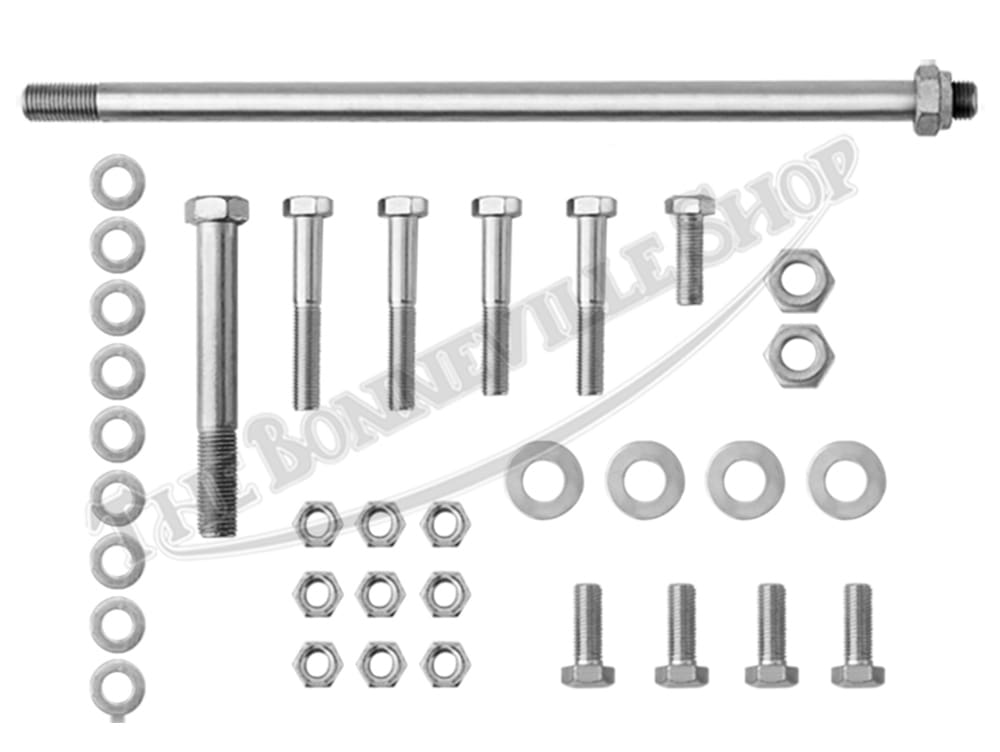
A period-correct engine-to-frame bolt set for a Triumph Bonneville — a typical mix of BSF and BSW fasteners found throughout classic British motorcycles.
BSF + BSW Whitworth Tap and Die Set
For cleaning damaged threads or cutting new ones on British-standard fasteners. Essential if you're rebuilding an engine or restoring chassis hardware on any pre-1970s British vehicle.
BA — British Association (the small-thread specialist)
The family's true outlier — a 47.5-degree angle, metric origins, and a numbering system that runs backwards.
The British Association series is the member that trips people up most. Where BSW and BSF were designed for the bolts that hold machines together, BA threads were designed for small, precise work — electrical terminals, scientific instruments, telephone equipment, clocks, and model engineering.
What makes BA different:
- A 47.5-degree flank angle, not 55. BA was based on the Swiss Thury thread system, which is why it breaks from the Whitworth angle entirely.
- Metric origins. BA sizes are actually defined in millimeters, then expressed as numbers — a British standard with metric DNA, sized in a way that looks neither imperial nor obviously metric.
- A numbered series that gets smaller as the number gets bigger. 0BA is the largest; the numbers increase as the threads shrink.
Common BA sizes:
| BA number | Approx. major diameter | Approx. pitch |
|---|---|---|
| 0 BA | 6.0 mm | 1.00 mm |
| 2 BA | 4.7 mm | 0.81 mm |
| 4 BA | 3.6 mm | 0.66 mm |
| 6 BA | 2.8 mm | 0.53 mm |
| 8 BA | 2.2 mm | 0.43 mm |
| 10 BA | 1.7 mm | 0.35 mm |
BA threads survived in electrical and electronic work well into the modern era — long after BSW and BSF faded — precisely because of their dominance in terminals, panel hardware, and instruments.

British Association fasteners as found in vintage instrument panels, Lucas electrics, and scientific equipment. Note the diminutive size compared to a standard bolt.
British Association (BA) Tap and Die Set, 0–10 BA
Covers the full range of BA fasteners encountered in vintage British electrical systems, instruments, and model engineering. Essential for restoring Lucas wiring looms and panel hardware.
BSP — British Standard Pipe (the sealing thread)
The most "alive" member of the family — still a global standard for fluid and gas fittings.
Bolts hold things together; pipe threads have a different job: sealing against the pressure of a fluid or gas. British Standard Pipe is the Whitworth-form thread adapted for plumbing, hydraulics, and fuel and oil fittings, and it is still in worldwide use today.
BSP carries the 55-degree Whitworth form but has its own crucial sub-distinction:
- BSPP (Parallel), denoted G. The thread is parallel (straight) along its length. Sealing comes from a bonded washer, O-ring, or separate sealing face — not from the threads themselves. Used where a fitting needs to be positioned and then sealed independently.
- BSPT (Tapered), denoted R. The thread tapers along its length, so it wedges and seals as it tightens — usually with thread sealant or PTFE tape. Used for direct threaded pipe connections.
Common BSP sizes:
| BSP size | Threads per inch | Approx. thread major dia. |
|---|---|---|
| 1/8" | 28 | 9.7 mm |
| 1/4" | 19 | 13.2 mm |
| 3/8" | 19 | 16.7 mm |
| 1/2" | 14 | 21.0 mm |
| 3/4" | 14 | 26.4 mm |
| 1" | 11 | 33.2 mm |
BSP's closest rival is the American NPT (National Pipe Taper) thread. They are not interchangeable — NPT uses a 60-degree form and a different taper, so mixing BSP and NPT fittings is a classic source of leaks. If you work on machinery sourced from both sides of the Atlantic, this distinction is worth memorizing.
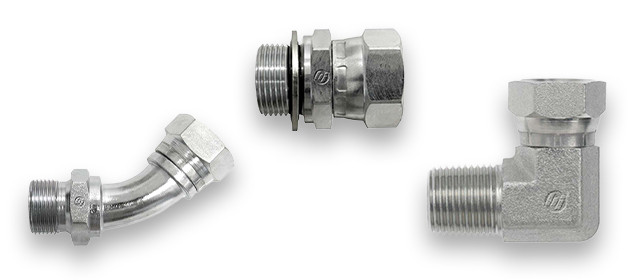
BSPP and BSPT hydraulic fittings — the 55° Whitworth-form pipe thread that remains a current global standard for fluid and gas systems.
BSC / CEI — British Standard Cycle (the motorcycle thread)
The one British standard that uses a 60-degree angle — and the thread of Triumph, BSA, and Norton.
The last major member is the one classic-motorcycle owners know intimately. British Standard Cycle — historically called the Cycle Engineers' Institute (CEI) thread — was developed specifically for the bicycle and then the motorcycle industries, where thin-walled tubing and small, fine fittings demanded something specialized.
BSC has two notable features:
- A 60-degree flank angle — making it, ironically, the one British standard in this group that shares the American/metric angle rather than Whitworth's 55 degrees.
- Consistently fine pitches, often standardized at 26 TPI across a wide range of diameters, which suited the thin tubing and repeated assembly/disassembly of cycles.
That 26-TPI commonality is a useful identification clue: a fine British thread at 26 TPI on a motorcycle is very often Cycle thread. BSC dominated British motorcycle production — Triumph, BSA, Norton, and others used it extensively — which is why a dedicated Cycle-thread tap, die, and gauge set is a staple in any classic British bike workshop.
How to identify a mystery British thread
Work through these five steps in order before touching a fastener.
This is the practical heart of the matter. You are holding an unfamiliar fastener off an old machine and you need to know what it is.
Step 1 — Rule metric and SAE in or out first
Before assuming anything is British, check it against your metric and Unified pitch gauges. If it matches a standard metric (60-degree) or UNC/UNF thread cleanly, you are done. British threads are a diagnosis of exclusion as much as anything — you suspect them when the common systems do not fit.
Step 2 — Measure the flank angle
This is the master clue. Using a thread profile gauge or a good photograph against a protractor:
- 55 degrees points you to the Whitworth family: BSW, BSF, BSP, or BSC's cousins.
- 47.5 degrees is the signature of BA — and almost nothing else you will encounter. A small fastener at 47.5 degrees is BA until proven otherwise.
- 60 degrees on a British machine, especially a motorcycle, raises BSC/Cycle — but also keep metric and Unified in mind, since they share this angle.
Step 3 — Count the threads per inch with a pitch gauge
A thread pitch gauge (the little fan of toothed blades) is indispensable here. Find the blade that seats perfectly into the thread with no gaps, and read off the TPI.

A thread pitch gauge — the quickest way to confirm TPI on an unknown fastener. Look for a set that includes BSW, BSF, and Unified blades.
Thread Pitch Gauge Set — Metric, Imperial & Whitworth
Identifies thread pitch in seconds at the bench. The ChgImposs set includes 55° (Whitworth/BSW/BSF) and 60° (metric/Unified) blades so you can rule metric in or out before committing to a British standard.
Step 4 — Measure the major diameter
Measure with calipers (the outside diameter of a male thread). Combined with the TPI from Step 3 and the angle from Step 2, you can almost always land on a single standard.
Step 5 — Cross-reference diameter + TPI against the tables
- Coarse 55-degree thread, diameter and TPI matching the BSW table → BSW
- Finer 55-degree thread at the BSF TPI for that diameter → BSF
- Tiny 47.5-degree thread matching a BA number → BA
- 55-degree thread where the "size" is far smaller than the actual thread diameter, often tapered → BSP
- Fine 60-degree thread, frequently 26 TPI, on a cycle or motorcycle → BSC/Cycle
Why these threads still matter
It would be easy to dismiss the British system as obsolete, and for new design it largely is — metric won. But these threads are far from dead in the places that count:
- Classic and vintage vehicles. Any British car built before metrication — Jaguar, MG, Triumph, Austin, Morris, Land Rover, and countless others — is full of BSW and BSF fasteners. Restoring or maintaining one without British taps, dies, and spanners is nearly impossible.
- Classic motorcycles. The British bike industry ran on BSC/Cycle and BSF threads. Triumph, BSA, Norton, and Royal Enfield restorations depend on them.
- Machine tools and industrial plant. Old lathes, mills, presses, and machinery built in Britain or its export markets are riddled with Whitworth-family threads, and that equipment is often still in service or being restored.
- Pipe and hydraulic fittings. BSP is genuinely current — it remains a global standard for fluid and gas fittings, sitting alongside (and frequently confused with) NPT.
- Model engineering and instruments. BA threads persist in the precise, small-scale world they were built for.
For anyone who works on old machinery, the British thread family is not history — it is a living, daily reality, and knowing it is what separates a clean restoration from a box of stripped, ruined fasteners.
Whitworth, Unified and metric: how the standards fit together
Whitworth was the first standardized thread. It was not the last. The vocabulary still trips people up because each link in the chain gets called by a different name depending on who you ask.
| Year | Standard | Angle | What happened next |
|---|---|---|---|
| 1841 | Whitworth (BSW) | 55° rounded | Still current in BSP plumbing and classic UK vehicles |
| 1864 | Sellers thread (proposal) | 60° flat | Became the de facto U.S. Standard from 1868 |
| 1924 | American National (NC / NF) | 60° flat | Formal codification of Sellers; replaced by Unified in 1948 |
| 1948 | Unified (UNC / UNF / UNEF) | 60° flat | Result of the US/UK/Canada Inch Screw Thread Agreement. The current US inch standard. |
| 1947+ | ISO Metric (M-series) | 60° flat | Global default outside the US. M8×1.25, M10×1.5, etc. |
Classic Land Rovers (Series I, II, IIA, III)
The most active community keeping Whitworth alive is Land Rover restoration. The original utility Land Rover, produced from 1948 as the Series I, used predominantly BSW and BSF threads on body and chassis, UNF on the drivetrain (inherited from the Rover P3 engine), and BA threads on Lucas electrical components. The Series II, Series IIA, and Series III continued the BSF-on-chassis / UNF-on-drivetrain split until the all-metric Defender debuted in 1983.
The Terminology Trap
Three centuries of layered standards mean the vocabulary can mislead. Here's the quick reference.
| Term | Meaning | Status |
|---|---|---|
| Whitworth (BSW) | British Standard Whitworth. 55°, rounded. Coarse pitch. | 1841–present (legacy) |
| BSF | British Standard Fine. Same 55° Whitworth form, finer pitches. | 1908–present (legacy) |
| BSP | British Standard Pipe. 55° Whitworth-form pipe thread. | Current outside the US |
| BSC | British Standard Cycle. 60° for bicycles. NOT Whitworth-form despite the "BS" prefix. | Current (niche) |
| BA | British Association. 47.5° thread for small instruments and electrical. Sized 0BA to 22BA. | Current (restoration) |
| Sellers thread (1864) | 60° flat-crest profile proposed by William Sellers. Adopted as the de facto U.S. Standard from 1868; codified as American National in 1924. "Sellers Standard" is colloquial — never a published standard name. | Obsolete name; profile lives on as Unified |
| NC / NF | National Coarse / National Fine. Pre-Unified American standard. | Obsolete (replaced by Unified) |
| UNC / UNF / UNEF | Unified Coarse / Fine / Extra Fine. The current American inch standard. | Current (US inch) |
| SAE | Society of Automotive Engineers. Adopted Unified. "SAE wrench set" = inch wrench set. | Casual American usage |
| Imperial | British colloquial umbrella for "inch threads." Includes BOTH Whitworth and Unified. | Casual British usage |
| Standard | American shop slang for "inch, not metric." Imprecise. | Casual American usage |
| ISO Metric (M-series) | 60° thread, designated by diameter × pitch in mm (M8×1.25, etc.). | Global default outside the US |
Quick reference: the British thread family
All five standards at a glance — angle, pitch character, sizing method, and the one clue that identifies each.
| Thread | Angle | Pitch character | Sized by | Tell-tale identification clue |
|---|---|---|---|---|
| BSW | 55° | Coarse | Diameter (in) | Coarse 55° thread; matches BSW TPI table |
| BSF | 55° | Fine | Diameter (in) | Finer 55° thread; same hex as the BSW one size down |
| BA | 47.5° | Fine | Number (metric-derived) | 47.5° angle; bigger number = smaller thread |
| BSP | 55° | Medium | Pipe bore (in) | "Size" much smaller than actual thread dia.; often tapered |
| BSC / CEI | 60° | Fine (often 26 TPI) | Diameter (in) | 60° British thread, usually on cycles/motorcycles |
Tools you need for British thread work
Three tools cover almost every identification and repair job you will encounter.
Thread Pitch Gauge — Metric, Imperial & Whitworth
The essential first tool. Confirms TPI in seconds and rules metric/SAE in or out before you touch anything. The 55° Whitworth blades identify BSW, BSF, and BSP; 60° blades cover metric and BSC.
British Whitworth BSW Combination Wrench Set
The wrench set for any pre-1970s British vehicle or machine. One Whitworth spanner covers a BSW bolt and the BSF bolt one size up, not a same-diameter BSF. Dual-marked sets note both the bolt size and across-flats dimension.
BSF + BSW Whitworth Tap and Die Set
For cleaning or cutting BSW and BSF threads. A must-have for engine rebuilds, restoration work, or any job where corroded threads need chasing.
As an Amazon Associate, WhatSizeBolt earns from qualifying purchases on the links above.
Related reading
- How to Identify Bolt Thread Pitch: A Complete Guide — using pitch gauges to nail down TPI.
- Coarse vs Fine Thread: Which Is Stronger? — the same coarse/fine logic that produced BSW and BSF.
- Metric vs SAE Bolts: Complete Comparison Guide — for ruling out the modern systems first.
Working on a classic British vehicle? Once you have identified your thread, our fastener lookup can help you find exact replacement specifications and the right tools for the job.