Essential Tools for Working with Fasteners
By WhatSizeBolt TeamEdited 5 min read
Build your toolkit with the right tools for fastener installation, removal, and maintenance.
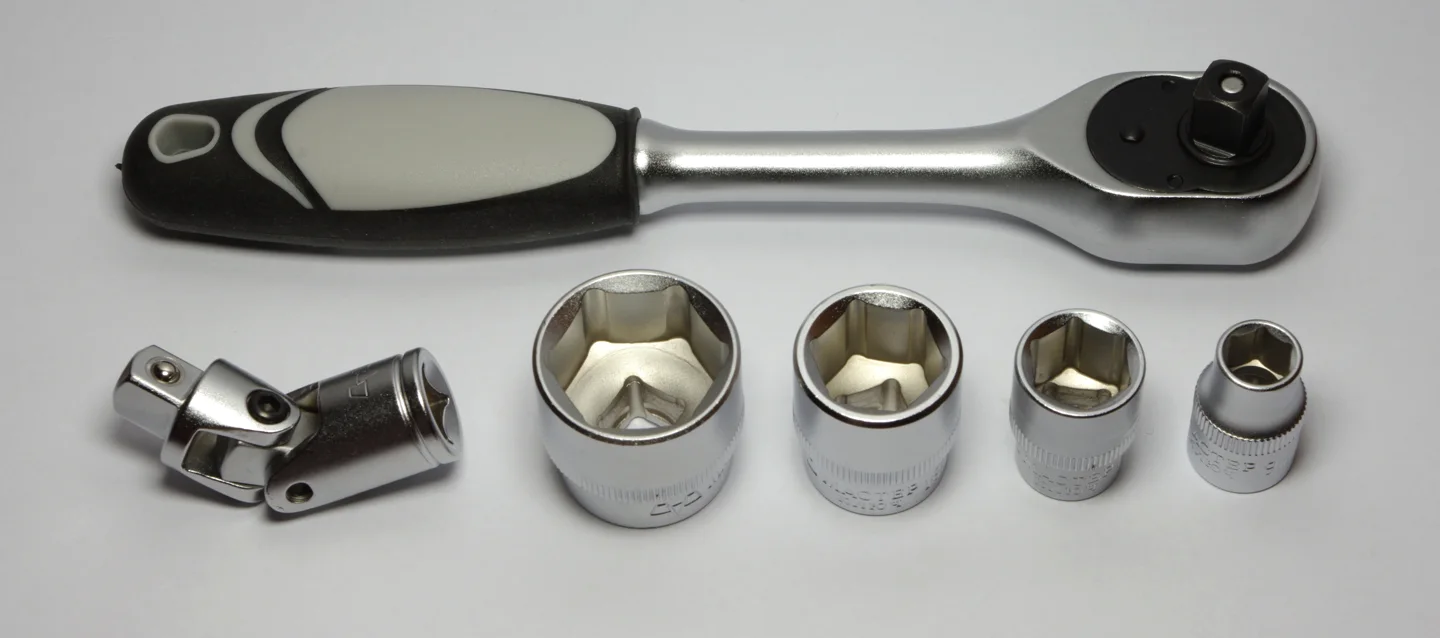
An ordinary ratchet and sockets, not a torque wrench.
Photo: Kae · CC BY-SA 3.0 · Resized without cropping for the article hero.
The right tools turn fastener work from a fight into a five-minute job. Whether you’re a pro or a weekend DIYer, this guide builds a kit that covers the common jobs — and tells you exactly what to order when you hit a fastener your current tools can’t touch.
Know the drive type before you buy
Half of buying the right tool is recognising the recess in the fastener head.

Modern cars use Torx and hex far more than they used to, and Phillips vs Pozidriv trips people up — a Phillips bit cams out of a Pozidriv screw and chews the head. Buy bits and drivers to match the recess, and keep both metric and imperial on hand for sockets, hex keys and wrenches.
Core hand tools
The set that covers 90% of jobs — buy quality chrome-vanadium once and it lasts decades.
| Tool | Sizes to get | Why |
|---|---|---|
| Combination wrenches | 8–19 mm, 5/16–3/4 in | Box + open end in one; ratcheting versions speed repetitive work |
| Socket set | 1/4, 3/8 & 1/2 in drive; shallow + deep | Trim screws to axle nuts; 72-tooth ratchets reach tight spots |
| Screwdrivers | Phillips #0–3, slotted, Torx T10–50, hex | Quality tips resist cam-out; Torx and hex are everywhere now |
| Pliers | Needle-nose, 7" locking, cutters | Locking pliers grip rounded or snapped fasteners |
Some links below are Amazon affiliate links — as an Amazon Associate we may earn a small commission at no extra cost to you.
Mechanic’s socket set
1/4, 3/8 and 1/2" drive with shallow and deep sockets covers nearly every nut and bolt on a vehicle. Fine-tooth ratchets work in tight spaces.
Combination wrench set
Box end for breaking loose, open end for speed. A metric + imperial pair handles almost anything.
Measure and identify fasteners
You can’t buy the right replacement fastener until you’ve measured the old one.
- Digital calipers (6–8", 0.001" resolution) — diameter, length and head size in metric or imperial.
- Thread-pitch gauges — metric and imperial leaves to read pitch / TPI off the threads.
- A steel rule — quick length and bolt-circle checks.
Digital calipers
Stainless, 6" minimum, metric and imperial. The fastest way to nail diameter and length so the replacement fastener actually fits.
Torque and thread-repair tools
For the jobs where a number matters — or where the threads are already damaged.
- Torque wrench — click type (1/4, 3/8 or 1/2" drive) for repeatable, exact tightening. Store it at the lowest setting.
- Tap & die set — cut new threads or clean up damaged ones, metric and imperial.
- Thread chaser — restores threads without removing metal; safer than a tap on good threads.
- Thread-insert kit (Heli-Coil type) — permanent repair for a stripped hole, stronger than the original.
1/2" click torque wrench
Calibrated and audible. Essential for head bolts, wheels and anything the manual gives a spec for.
Thread-repair / insert kit
Drill, tap and inserts to rebuild a stripped thread in aluminium or steel — a fraction of the cost of replacing the part.
When a fastener fights back
Rounded, seized or snapped — the tools that get it out without wrecking the part.
- Screw & bolt extractors — left-hand spiral or gripping sockets bite into rounded or broken fasteners.
- Penetrating oil — PB Blaster, Liquid Wrench; give it time (overnight is best) and add heat.
- Angle grinder or hacksaw — the last resort to cut a seized bolt flush.
Bolt & screw extractor set
Deep extraction sockets with reverse spiral flutes that bite into rounded, stripped or rusted heads — saves expensive components when a fastener shears.
Chemicals every kit needs
Cheap bottles that prevent the most expensive fastener failures.
- Penetrating oil for stuck and rusted fasteners.
- Threadlocker — blue (removable) and red (permanent) to stop vibration loosening.
- Anti-seize — prevents galling on stainless and high-heat threads (and changes the torque, so adjust).
Build your kit by budget
Start with the essentials and add specialised tools as the jobs demand them.
| Tier | What to add | Rough budget |
|---|---|---|
| Starter | 3/8" socket set, combination wrenches, screwdrivers, adjustable wrench, calipers, thread gauge | Under $200 |
| Intermediate | Add 1/4 & 1/2" sockets, torque wrench, impact driver, thread-repair + extraction kits | $200–500 |
| Professional | Multiple torque wrenches, air tools, specialised extractors, precision measuring, real storage | $500+ |
Frequently asked questions
What’s the one tool to buy first?
A 3/8" drive socket set with a fine-tooth ratchet. It covers more fasteners than any other single tool; add combination wrenches and a screwdriver set next.
Metric or imperial?
Both, eventually. Modern and import vehicles are mostly metric; older domestic and many shop fittings are imperial. Buy metric first if you work on newer cars.
Click or beam torque wrench?
A click wrench for everyday work — it’s faster and gives a clear stop. A beam wrench is a cheap, drift-free backup for checking the click wrench stays honest.
Keep going
Bottom line: build the kit in layers — a socket set, wrenches and screwdrivers first, then calipers and a thread gauge to identify fasteners, then a torque wrench and repair/extraction kits for when things go wrong. Match every bit to its drive type, buy quality once, and order the missing piece before the job, not halfway through it.