How to Fix a Stripped Screw Hole in Wood (5 Proven Methods)
By WhatSizeBolt TeamEdited 6 min read
Five proven ways to fix a stripped screw hole in wood, metal, and plastic — from the toothpick trick to permanent threaded inserts.
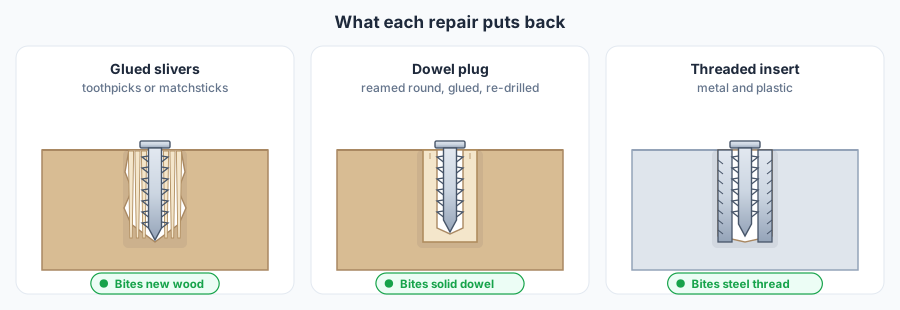
Not every stripped screw hole needs the same fix. A wobbly cabinet hinge or loose furniture screw calls for a different repair than a load-bearing joint or a stripped hole in metal — using the wrong one is why some fixes don’t hold. For light everyday wood repairs, the fastest fix is glue-coated toothpicks: pack the hole, let the glue cure, and drive the original screw back in — about a minute, start to finish. For anything load-bearing or in metal, skip straight to a threaded insert for full-strength threads. A stripped hole just means the threads that used to grip the screw are chewed out or worn away — you almost never need to replace the whole part.
Why screw holes strip
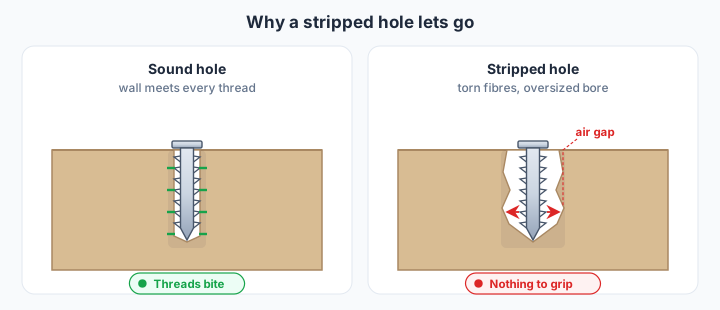
Threads strip when the material gripping the screw is damaged or worn away.
- Over-tightening — the threads shear off once the head seats.
- Cross-threading or repeated removal and reinstallation.
- Wrong-size screw — too small for the hole to begin with.
- Soft material — pine, particleboard and aluminium strip far more easily than hardwood or steel.
Method 1: the toothpick or matchstick trick (wood)
Best for small screws in wood or particleboard — a loose hinge or cabinet handle.
- Dip a few wooden toothpicks or a matchstick in wood glue.
- Pack them into the stripped hole and snap them off flush with the surface.
- Let the glue cure, then drive the original screw back in — it now bites into fresh wood.
Some links below are Amazon affiliate links — as an Amazon Associate we may earn a small commission at no extra cost to you.
Titebond III wood glue
Waterproof PVA wood glue — coat the toothpicks or dowel so the plug bonds to the old hole instead of just wedging in it. Clamp-free: let it cure before you drive the screw.
Method 2: golf tee or dowel (larger wood holes)
Best for bigger holes where toothpicks aren’t enough.
- Coat a golf tee or wooden dowel with wood glue and tap it into the hole.
- Cut it flush once dry.
- Drill a new pilot hole through the plug and reinstall the screw.
Fluted hardwood dowel pins (1/4–1/2 in)
Pick the pin that fills the stripped hole snugly; the flutes let glue spread along its length.
Drill bit set (wood, metal & plastic)
Drill the fresh pilot hole at the screw’s core diameter, and the plug if it is proud.
Method 3: go up a screw size
Best for any material where slightly larger hardware is acceptable.
The simplest fix is often a longer or wider screw that reaches fresh material the stripped one couldn’t grip. Move up one gauge or length so the new threads bite into undamaged surface. If you’re unsure what size you need, our guide to measuring bolt and screw size walks you through it.
Method 4: threaded inserts (metal and plastic)
Best for a strong, permanent repair in metal, hard plastic, or load-bearing wood.
A threaded insert — such as a helical wire insert (commonly called by the brand name Heli-Coil) — restores machine threads better than the original.
- Drill the hole out to the size specified by the insert kit.
- Tap new threads with the supplied tap.
- Thread the insert in until it sits just below the surface.
- Install your original screw or bolt into the new, stronger threads.
Thread repair (Heli-Coil) kit
Drill, tap and helical inserts in one kit — restores full machine threads in metal that are stronger than the original hole. Get the kit that matches your thread size.
Method 5: epoxy or wood filler
Best for low-load holes where you can’t easily add an insert.
- Fill the hole with two-part epoxy (metal/plastic) or wood filler (wood).
- For removable screws — wax the threads and set the screw in the wet filler to form a mould, then back it out before full cure.
- For permanent screws — let it cure solid, drill a fresh pilot hole, and install.
J-B Weld KwikWood epoxy putty
Knead-and-press wood epoxy: packs a chewed-out hole, sets hard in about an hour, then takes a pilot hole and a screw like solid wood.
Which method should you use?
Pick by material and whether you want a quick or permanent repair.
| Material | Quick fix | Permanent fix |
|---|---|---|
| Softwood / particleboard | Toothpicks + glue | Dowel or larger screw |
| Hardwood | Larger screw | Dowel plug + new pilot |
| Metal | Larger machine screw | Threaded insert |
| Hard plastic | Epoxy | Threaded insert |
What to buy for each fix
Most wood repairs need only glue and a plug; keep inserts for holes that get reused.
Titebond III wood glue
Glue for the toothpick and dowel fixes.
Fluted dowel pins, 1/4–1/2 in
Plugs for holes toothpicks can’t fill.
J-B Weld KwikWood
Wood epoxy putty you can drill and screw into.
Threaded inserts for wood (10 sizes)
Real machine threads in wood for parts you take apart often — they never strip.
How to avoid stripping holes again
A few habits keep threads intact.
- Drill a proper pilot hole sized for the screw’s core diameter.
- Don’t over-tighten — stop as soon as the head seats.
- Use a hand driver, or a clutch-equipped drill on a low setting, for the final turns.
- For fasteners that come out often, install a threaded insert from the start.
Frequently asked questions
Can you fix a stripped screw hole without filling it?
Yes — going up a screw size is the fastest no-fill option, as long as a slightly larger fastener works for the part.
What is the strongest stripped-hole repair?
A threaded metal insert. It restores full-strength machine threads and is rated for higher loads than the surrounding material, which is why it’s the go-to for metal and anything load-bearing.
Will wood glue alone fix a stripped hole?
Rarely — glue needs material to bind. Pair it with toothpicks, a dowel or filler so the screw has fresh threads to bite into.
Can I reuse the same screw after repairing the hole?
Usually yes, once the hole has fresh material or a new insert — provided the screw itself isn’t damaged. For a threaded insert, reinstall a screw that matches the insert’s thread, not the drilled hole.
Keep going
Bottom line: a stripped hole almost never means a ruined part. For wood, pack it with glue and toothpicks or a dowel, or step up a screw; for metal and hard plastic, a threaded insert restores threads stronger than new; and for low-load spots, epoxy and a fresh pilot will do. Match the repair to the material and the load, and it’ll hold.