Best Tools for Removing Rusted Bolts: A Mechanic's Complete Toolkit
By WhatSizeBolt TeamEdited 8 min read
Rusted bolts are one of the most common challenges in automotive repair.
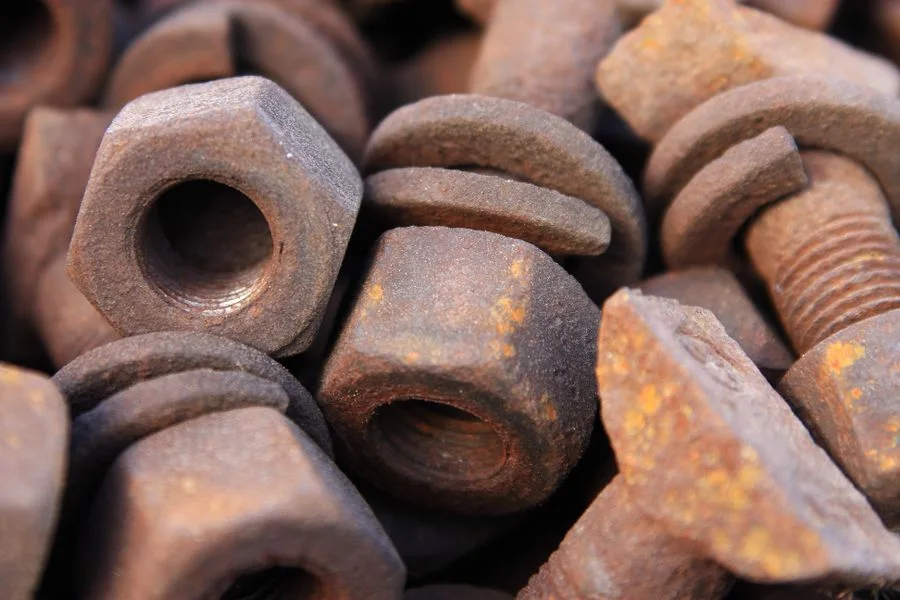
Visible corrosion for inspection context, not a reuse verdict or an extraction procedure.
Photo: gervee · Pexels License · Resized without cropping for the article hero.
A rusted, seized bolt is one of the most common headaches in automotive and DIY repair. Corrosion effectively welds the threads together, so the fastener won’t budge — and forcing it usually rounds the head or snaps the bolt, turning a small job into a big one. The fix is having the right tools and working through them in the right order: penetrate, then leverage, then impact, then heat, and only reach for the destructive tools last. Here is the complete toolkit and the sequence that frees rusted bolts without breaking them.
Why rusted bolts seize
Understanding the bond tells you which tool actually breaks it.
Rust (iron oxide) forms between the bolt threads and the nut or tapped hole and expands as it grows, locking the two together. That is why brute force alone tends to fail — you are fighting a mechanical bond, not just friction. The winning strategy is to attack that bond directly: creep a penetrant into the threads, shock or heat the joint to crack the corrosion, and apply steady, controlled force through a tool that grips the head fully so it can’t slip and round off.
The rusted-bolt toolkit
Each tool solves a different part of the problem — and they build on each other.
- Penetrating oil — creeps into corroded threads and breaks the rust bond so the bolt can turn.
- Breaker bar — a long, non-ratcheting bar that multiplies your leverage for a slow, steady pull.
- Six-point sockets and box wrenches — grip all six flats of the head so force can’t round it off.
- Impact wrench — delivers rapid rotational hammer blows that shock a stubborn bolt loose.
- Heat source — a propane or MAPP torch expands the surrounding metal and cracks the corrosion.
- Bolt / screw extractor — bites into a sheared or rounded bolt and threads it out counter-clockwise.
- Nut splitter — cracks a seized nut off the bolt when nothing will turn it.
Step 1: soak it in penetrating oil
The first move, and the one people rush — give the penetrant time to work.
Spray a quality penetrating oil directly onto the threads at both ends of the joint and let it wick in for at least 15–30 minutes — longer, or overnight, for heavy rust. A dedicated penetrant such as PB B’laster or Kroil creeps into corroded threads far better than general-purpose WD-40. Tapping the bolt head lightly with a hammer while it soaks sends vibration down the threads and helps the oil migrate. Reapply and wait again rather than forcing a dry, stuck bolt.
Some links below are Amazon affiliate links — as an Amazon Associate we may earn a small commission at no extra cost to you.
Penetrating oil (PB B’laster / Kroil)
A proper penetrant — not general-purpose spray — wicks into corroded threads and breaks the rust bond. Give it 15–30 minutes (or overnight) and reapply; it frees a surprising number of seized bolts on its own.
Step 2: apply leverage with a breaker bar
Slow, steady force through a full-contact socket — not a sharp yank.
Fit a six-point socket that matches the head exactly (six-point grips all the flats; a worn twelve-point or the wrong size is what rounds bolts off). Put it on a breaker bar — the long handle multiplies your torque far beyond a ratchet, and because it doesn’t have a ratcheting mechanism it can take the load safely. Apply smooth, increasing pressure rather than a sudden jerk; if it won’t give, stop before you shear it and move to heat or impact. A length of pipe over the handle (a “cheater bar”) adds leverage in a pinch, but pushes you closer to snapping the bolt.
Step 3: shock it loose with an impact wrench
Rapid hammer blows often break a rust bond that steady pull can’t.
An impact wrench delivers hundreds of short rotational blows a second, and that hammering action shocks a seized bolt loose where continuous force just twists it. Use impact-rated (black) sockets — chrome hand sockets can shatter under impact — and let the tool work in short bursts rather than leaning on it. A cordless or air impact is the tool of choice for rusted suspension, exhaust and undercarriage bolts.
Impact wrench & impact-socket set
Rapid rotational blows break rust bonds that a steady pull won’t. Pair a cordless or air impact wrench with impact-rated (black) sockets — standard chrome sockets can shatter under the hammering.
Step 4: add heat to break the rust bond
Thermal shock cracks corrosion when penetrant and force aren’t enough.
Heat is the great equalizer on truly seized fasteners. Play a propane or MAPP-gas torch on the nut or the metal around the bolt (not the bolt itself) for a few seconds so it expands and the corrosion cracks, then let it cool and reapply penetrating oil — the thermal cycling actually draws the oil into the threads. Repeat the heat-and-cool cycle a couple of times, then try the breaker bar or impact again while the joint is still warm.
Step 5: last resort — extractor or nut splitter
When the bolt has sheared or rounded, switch to the removal tools.
If the head shears off or rounds beyond grip, a bolt (screw) extractor is next: drill a pilot hole into the broken bolt, tap the extractor in, and turn it counter-clockwise so its reverse flutes bite and thread the bolt out. Go slowly — extractors are hardened and brittle, and a snapped extractor is far harder to remove than the bolt. When it’s a seized nut you’re fighting, a nut splitter clamps over it and drives a hardened chisel through one flat to crack it off without damaging the bolt threads. For a bolt that has broken off flush, see our full walkthrough on drilling out a broken bolt.
Bolt / screw extractor set
Hardened, tapered flutes bite into a drilled pilot hole and thread a broken or rounded bolt out counter-clockwise. Match the extractor to the bolt size and turn slowly — a snapped extractor is the one thing worse than the seized bolt.
Which tool for which situation
Match the tool to the state the bolt is in.
| Situation | Reach for | Why it works |
|---|---|---|
| Bolt intact, just rusted | Penetrating oil + breaker bar | Frees the threads, then steady leverage turns it out. |
| Rusted solid, won’t move | Impact wrench, then heat | Hammer blows and thermal shock crack the rust bond. |
| Head rounded off | Bolt extractor (or extractor socket) | Bites fresh metal to grip where the flats are gone. |
| Bolt sheared flush | Drill + screw extractor | Pilot hole and reverse flutes back the broken bolt out. |
| Seized nut on a good bolt | Nut splitter | Cracks the nut off without harming the bolt threads. |
Tips to avoid snapping the bolt
The difference between freeing a bolt and breaking it is mostly patience.
- Give the penetrant time. Minutes, not seconds — and reapply instead of forcing a dry bolt.
- Grip fully. A six-point socket or box wrench of the exact size; never a loose or twelve-point fit.
- Loosen, then tighten. Working the bolt back and forth a little each way helps break the rust free.
- Stop before it shears. If it’s not moving, add heat or impact rather than more raw force.
- Chase the threads after. Once it’s out, run a tap or die through to clean the corrosion before reassembly.
Frequently asked questions
What is the best penetrating oil for rusted bolts?
A dedicated penetrant such as PB B’laster or Kroil outperforms general-purpose WD-40 for seized threads. A home mix of 50/50 acetone and automatic transmission fluid also works well. Whatever you use, give it 15–30 minutes — or overnight — and reapply.
Does heating a rusted bolt help remove it?
Yes. Heating the nut or surrounding metal with a propane or MAPP torch expands it and cracks the corrosion, and letting it cool then reapplying penetrant draws oil into the threads. Keep the flame away from fuel lines, rubber and anything flammable.
How do I remove a bolt with a rounded head?
Once the flats are gone, a bolt-extractor socket or a screw-extractor set bites into fresh metal to grip and back it out. If the bolt has sheared off flush, drill a pilot hole and use a screw extractor — our drilling guide covers the full sequence.
Should I use an impact wrench or a breaker bar first?
Try the breaker bar first for controlled, steady leverage. If the bolt won’t give, an impact wrench’s rapid hammer blows often shock it loose where continuous force can’t — just use impact-rated sockets so nothing shatters.
Keep going
Bottom line: removing a rusted bolt is about sequence, not force. Soak it in a real penetrant and give it time, break it loose with a breaker bar or impact wrench in a six-point socket, and add heat to crack the rust bond if it resists. Save the extractor and nut splitter for a bolt that has already sheared or rounded — and stop pushing before you snap it, because a broken bolt is a much longer job.
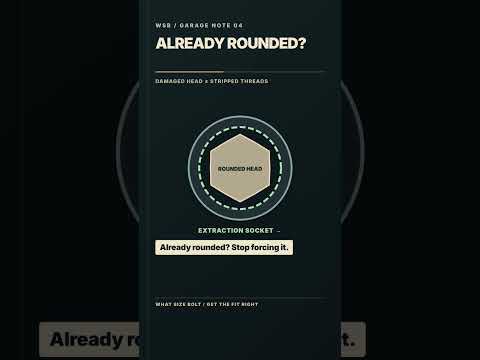
Video plays from YouTube when clicked. Always confirm torque values against your service manual.