Torque Wrench Sizes: When You Need an Inch-Pound Wrench (and Why Range Matters)
By WhatSizeBolt TeamEdited 7 min read
An 89 or 106 in-lb spec sits below the bottom of a 3/8-inch 10–80 ft-lb wrench, and click wrenches are only specified to hold tolerance from 20% to 100% of their scale. Here is how to match a 1/4-inch in-lb, 3/8-inch or 1/2-inch wrench to each spec, with the unit conversions.
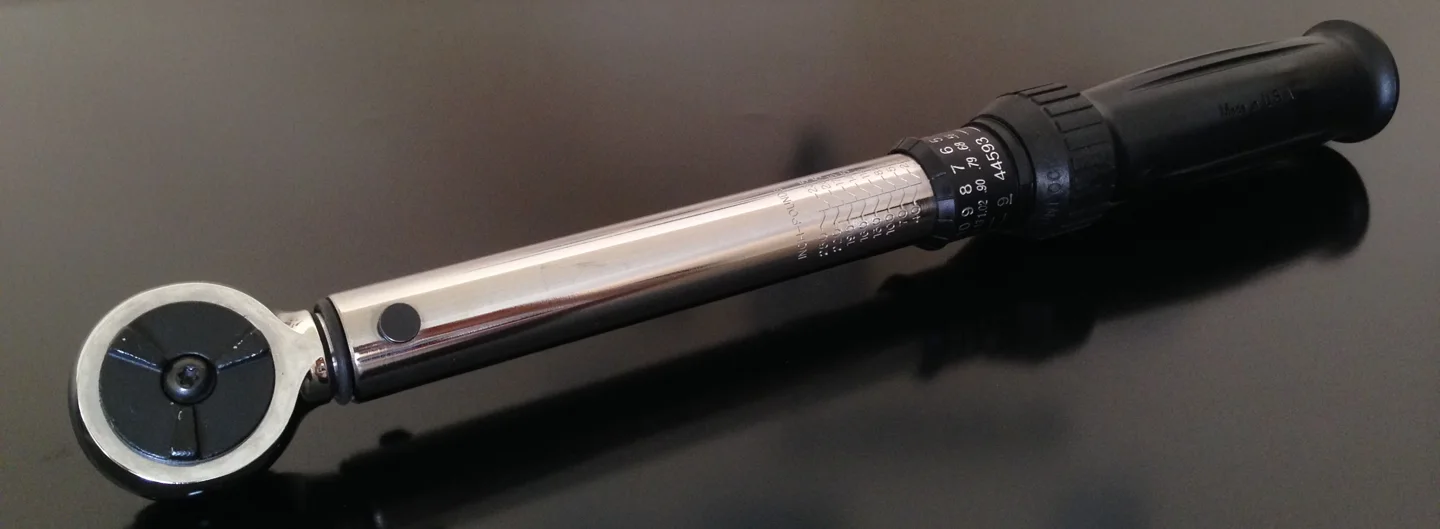
A 3/8-inch-drive inch-pound click wrench: drive size does not determine units or rated range. No calibration or vehicle specification is implied.
Photo: Typhoon at English Wikipedia (J.C. Fields) · CC BY-SA 3.0 · Resized without cropping for the article hero.
A 3/8” 10–80 ft-lb click wrench is the torque wrench most people buy, and it is the right one for a lot of jobs. It is the wrong one for a surprising number of sensor bolts, valve covers, thermostat housings, oil pans and oil pickup tubes, which are specified in inch-pounds — numbers like 89 or 106 in-lb that sit below the bottom of its scale. Here is how a wrench’s range really works, how to convert the units without a 12× mistake, and which wrench fits which spec.
Why a torque wrench’s range matters
A click wrench is accurate across a window of its scale, not all the way down to zero.
Every click wrench has a printed scale, and it is tempting to treat any number on it as usable. It is not. Most click-type wrenches are rated to hold ±4% of the reading (clockwise) only from 20% to 100% of their maximum scale — that is how makers state accuracy in the manual and on the box, so check yours. Below 20% of full scale the accuracy is not specified: the wrench will usually still click, but nobody has promised you where.
The practical rule is simple: choose the wrench that puts your number in roughly the middle of its range, and never in the bottom tenth. The table shows where that window sits for the three wrenches this guide recommends.
| Wrench | Printed scale | Rated window (20%–100%) | Typical jobs |
|---|---|---|---|
| 1/4” drive | 20–200 in-lb | 40–200 in-lb | Sensors, valve covers, small-engine fasteners |
| 3/8” drive | 10–80 ft-lb (120–960 in-lb) | 16–80 ft-lb (192–960 in-lb) | Spark plugs, drain plugs, brackets |
| 1/2” drive | 25–250 ft-lb | 50–250 ft-lb | Lug nuts, suspension, axle nuts |
Each window starts at 20% of that wrench’s maximum. The printed minimum is where the scale begins, not where the rated accuracy starts.
Inch-pounds and foot-pounds: the 12× mistake
Same unit family, twelve times apart.
- 1 ft-lb = 12 in-lb. Divide inch-pounds by 12 to get foot-pounds; multiply foot-pounds by 12 to go the other way.
- 1 N·m = 8.85 in-lb = 0.738 ft-lb. So a 10 N·m spec is about 88.5 in-lb, or 7.4 ft-lb.
Reading an 89 in-lb spec as 89 ft-lb is a 12× error. It can snap the bolt or strip the aluminium threads it screws into, and the mistake is easy to make because the wrong number still looks plausible. Check the unit on the spec and the unit on the wrench’s scale before you set the collar.
Why the bigger wrench is wrong for small specs
The bottom of a 3/8” wrench’s scale is 120 in-lb.
A 3/8” 10–80 ft-lb wrench starts at 10 ft-lb, which is 120 in-lb. An 89 or a 106 in-lb spec is not on its scale at all. Converting does not rescue it: 106 in-lb is 8.8 ft-lb, and 8.8 is still below 10. The scale has to contain the number, and ideally sit around the middle of it.
Going the other way does not help either. A 1/2” 25–250 ft-lb wrench set to 25 ft-lb is at 10% of its scale — outside its rated window — so for spark plugs and caliper slide pins from the mid-teens to the 30s of ft-lb, the 3/8” is the right tool. Even the 3/8” has a floor: its window starts at 16 ft-lb (20% of 80), so a spec between 10 and 16 ft-lb (120–192 in-lb) is better served by the 1/4” wrench, which tops out at 200 in-lb.
Some links below are Amazon affiliate links — as an Amazon Associate we may earn a small commission at no extra cost to you.
LEXIVON 1/4” Drive Inch Pound Torque Wrench, 20–200 in-lb
Puts 89, 106 and 115 in-lb specs mid-scale, well inside its rated window. The one to buy for sensor bolts, valve covers, thermostat housings, oil pans and small-engine fasteners.
Worked examples from real vehicle specs
Taken from this site’s own vehicle spec data, and matched to the wrench whose scale holds them.
| Spec | As written | In inch-pounds | Right wrench and where it lands |
|---|---|---|---|
| LS V8 valve cover bolts | 106 in-lb (8.8 ft-lb) | 106 | 1/4” 20–200 in-lb — about 53% of scale |
| Oil pump pickup tube bolts | 89 in-lb (10 N·m) | 89 | 1/4” 20–200 in-lb — about 45% of scale |
| Front ABS wheel speed sensor bolt | 115 in-lb (9.6 ft-lb) | 115 | 1/4” 20–200 in-lb — about 58% of scale |
| Sway bar end links | 17 ft-lb | 204 | 3/8” 10–80 ft-lb — about 21% of scale, just inside the window |
| Lug nuts (typical range) | 80–140 ft-lb | 960–1,680 | 1/2” 25–250 ft-lb — 32% to 56% of scale |
No single wrench covers that whole list inside its rated window. The span from 89 in-lb to 140 ft-lb (1,680 in-lb) is roughly 19 to 1, while a click wrench’s window runs from 20% to 100%, which is only 5 to 1. That is why a small set beats one “do-everything” wrench.
Small engines live in inch-pounds
Mowers and generators make the 1/4” wrench the one you reach for most.
On mower and generator engines, valve cover and carburetor fasteners are commonly specified in inch-pounds, and those numbers often sit below the scale of a 3/8” ft-lb wrench. Our small engine torque specs hub lists them by brand and engine, and the same 20–200 in-lb wrench covers them.
The three-wrench set that covers almost every spec
Buy by scale, not by brand.
- 1/4” drive, 20–200 in-lb: sensors, valve covers and small-engine fasteners. Many 1/4” wrenches are scaled in in-lb only, so check the scale before you set it.
- 3/8” drive, 10–80 ft-lb: spark plugs, drain plugs and brackets, the bulk of engine-bay work.
- 1/2” drive, 25–250 ft-lb: lug nuts, suspension and axle nuts, the big fasteners that would sit at the very bottom of a 3/8” scale or above its top.
LEXIVON 3/8” Drive Click Torque Wrench, 10–80 ft-lb (LX-182)
Anything from about 16 to 80 ft-lb sits inside its window: spark plugs, drain plugs, brackets and brake hardware. Not for anything under 120 in-lb.
LEXIVON 1/2” Drive Click Torque Wrench, 25–250 ft-lb (LX-184)
Lug nuts, suspension and axle nuts sit inside its 50–250 ft-lb window. Do not use it below about 50 ft-lb.
Prefer a lower-start 1/2” wrench? The EPAuto 1/2” 10–150 ft-lb click wrench is the one most readers click. Its window is 30–150 ft-lb, so it suits lug nuts, but its 150 ft-lb top is lower than the LEXIVON’s 250, so check your highest spec first.
Using the wrench: storage and technique
Two habits keep a click wrench inside its tolerance.
- Store it at its lowest setting, not zero. Leaving a click wrench wound up keeps its spring compressed. When you are done, back it off to the lowest mark on the scale — not to zero.
- Never use it to break bolts loose. It is a measuring instrument. Use a breaker bar to free a stuck fastener and keep the wrench for the final tightening.
For grip, pull angle and calibration, see How to Use a Torque Wrench.
Frequently asked questions
Can I use a 3/8” 10–80 ft-lb wrench for an 89 in-lb spec?
No. 89 in-lb is 7.4 ft-lb, below the 10 ft-lb (120 in-lb) bottom of its scale. Use a 1/4” 20–200 in-lb wrench instead.
Can I convert in-lb to ft-lb and use the bigger wrench?
The conversion is fine, just divide by 12, but it does not fix the range. 106 in-lb is 8.8 ft-lb, which is still under 10 ft-lb. The wrench’s scale has to contain your number, ideally near the middle.
What happens below 20% of a wrench’s scale?
The wrench will usually still click, but its accuracy there is not specified. If your spec keeps landing in the bottom tenth of a wrench, you own the wrong wrench for that job.
Do I really need three torque wrenches?
For the full range of automotive specs, a set of three is the practical answer. A single click wrench’s window spans only 5 to 1 (20% to 100% of its scale), while automotive specs run from under 100 in-lb to well over 100 ft-lb. If you only work on one kind of job, buy the one wrench whose window holds your numbers.
How do I convert N·m to in-lb?
Multiply by 8.85, because 1 N·m = 8.85 in-lb. To get ft-lb, multiply N·m by 0.738. A 10 N·m spec is about 88.5 in-lb, which rounds to 89 in-lb.
Keep going
Bottom line: a torque wrench is only as good as the part of its scale you use. Anything under about 120 in-lb — sensor bolts, valve covers, oil-pan and pickup-tube bolts — belongs on a 1/4” inch-pound wrench; spark plugs, drain plugs and brackets on a 3/8”; lug nuts, suspension and axle nuts on a 1/2”. Put the number in the middle of the scale, convert before you set the collar, and never trust the bottom tenth.