Whitworth vs. Sellers: How the World Ended Up With Two Screw Threads
The world's first national thread standard came out of a Manchester workshop in 1841. Twenty-three years later a Philadelphia machinist redrew it for the American shop floor — and for the next century the two systems refused to fit together. The story of the 55° vs 60° split, the wartime crisis it caused, and the 1948 truce that ended it.
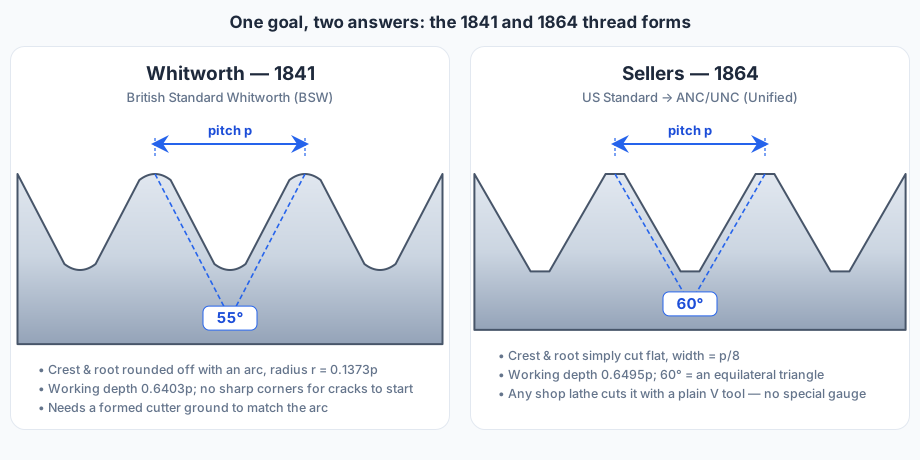
Part history, part engineering: where the two great inch thread standards came from, why they almost — but never quite — fit each other, and how a war finally forced the truce.
The bolt is the most standardized object humans make. Pick up an M10×1.5 in Tokyo, Detroit, or Stuttgart and it threads into the same nut. That boring reliability is so complete that it is hard to imagine the world before it — a world where every workshop cut its own private thread, where a machine sent back to its maker for repair might as well have been sealed shut to everyone else. Two men ended that world: a Manchester perfectionist named Joseph Whitworth, and a Philadelphia industrialist named William Sellers who decided, twenty-three years later, that Whitworth had gotten one thing importantly wrong.
Before 1841: every workshop, its own thread
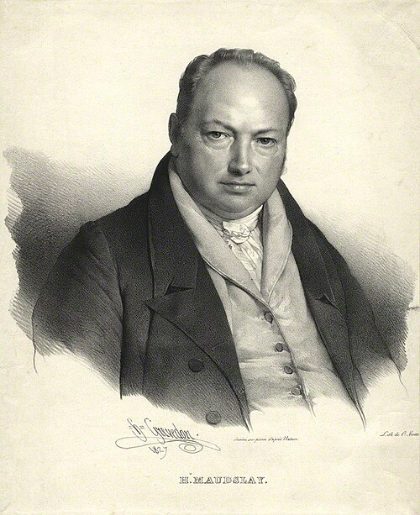
Joseph Whitworth was born in Stockport, near Manchester, in 1803, and came up through the most remarkable machine shop in history: the London works of Henry Maudslay, which he joined in 1825. Maudslay’s shop was the finishing school of British precision engineering — James Nasmyth (of steam-hammer fame) and Richard Roberts passed through the same rooms. Maudslay had already built the screw-cutting lathe into a serious instrument; what he could not do was make two shops agree on which screw to cut.
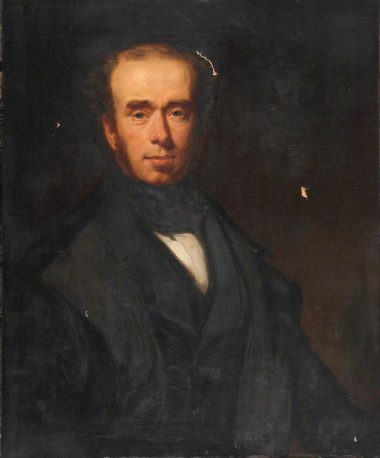
From Maudslay’s, Whitworth moved to Holtzapffel in 1828, then in 1830 to the workshop of Joseph Clement — where he worked on components for Charles Babbage’s Difference Engine, the most precision-hungry project of the age. In 1832–33 he returned to Manchester and hung out his own sign; his first patent, in 1834, was for a machine to turn and screw-cut studs and hexagonal bolts. The obsession was already visible.
Two of his workshop practices explain everything that followed. The first was the three-plate method for making truly flat surfaces: coat one plate with marking blue, rub it against a second, scrape down the high spots, and check both against a third — iterating until all three agree everywhere. Flatness created by mutual disagreement, not by reference to any master surface. The second was his measuring machine, built on the same end-measurement principle, which he demonstrated detecting differences other instruments simply could not see — popular accounts say a millionth of an inch; the Institution of Mechanical Engineers’ archive says finer still. Whichever figure you take, the point stands: Whitworth could measure better than anyone else could make, and a man who can measure a millionth of an inch finds the chaos of screw threads physically offensive.
1841: the averaging of England
In 1841 Whitworth presented “A Paper on an Uniform System of Screw Threads” to the Institution of Civil Engineers. What makes it a landmark is not just the proposal but the method — in his own words:
“An extensive collection was made of screw bolts from the principal workshops throughout England, and the average thread was carefully observed for different diameters.”— Joseph Whitworth, 1841
He did not invent a thread from theory. He surveyed the country’s existing practice like a census-taker, averaged it, and handed England back its own habits — tidied, tabulated, and made mutual. The average flank angle across all those workshop bolts came out near 55°, so 55° it was, for every diameter. He fixed the pitches to whole threads-per-inch, anchored on ¼, ½, 1 and 1½-inch reference sizes, and rounded off the sharp crests and roots of the theoretical V (one-sixth from each) so threads would shrug off the dings and bruises of real workshop life. As he put it, with a standard in place “a single set of screwing tackle would suffice.”
Notice what the rounding means in practice: a Whitworth thread has no sharp corners anywhere. Rounded roots spread stress that would otherwise concentrate at a notch — genuinely better fatigue behaviour, as the 20th century would later prove and re-adopt. But an arc of radius 0.1373×pitch cannot be cut with a plain pointed tool. It needs a formed cutter, ground to match, checked against a master. Whitworth’s thread quietly assumed every shop had Whitworth-grade tooling discipline. Remember that assumption; Philadelphia is going to attack it.
Two shapes for one job

| Property | Whitworth (BSW, 1841) | Sellers / US Std (1864) | Unified (UNC/UNF, 1948) |
|---|---|---|---|
| Flank angle | 55° | 60° | 60° |
| Crest | Rounded, r = 0.1373p | Flat, width p/8 | Flat, p/8 |
| Root | Rounded, r = 0.1373p | Flat, width p/8 | Rounded |
| Thread depth | 0.6403p | 0.6495p | 0.6134p |
| Tooling needed | Formed cutter matching the arc | Plain 60° V tool | Plain V tool |
| Checked with | Master gauges | An equilateral-triangle gauge | Standard gauges |
The two forms are almost the same depth and do exactly the same job. The entire century of grief that follows comes down to that 5° of flank angle and the shape of the tips.
The standard that built an empire
Adoption did not wait for permission. Whitworth noted in the 1841 paper itself that his system had “already been adopted exclusively on many of the railways” — the railway boom was the internet of the 1840s, and it needed interchangeable bolts more desperately than anyone. From the railways the thread spread through British industry; by about 1860 it was simply how Britain made screws. The Board of Trade specified it, the Royal Navy is credited with putting it into Crimean-era gunboat production, and when formal national standards arrived it was codified as BS 84 (1918) — by which point “British Standard Whitworth” had been the de facto law of the shop floor for over half a century. A fine-pitch sibling, BSF, followed in 1908 for the young motor industry.

The Great Exhibition of 1851 made Whitworth a celebrity. His firm showed over twenty machine tools — including the famous measuring machine — and won a Council Medal, the Exhibition’s top award, given to only about 170 exhibitors out of thousands. Honours stacked up from there: Fellow of the Royal Society, twice president of the Institution of Mechanical Engineers, a baronetcy from Queen Victoria in 1869. He endowed the Whitworth Scholarships for engineering students in 1868 with £100,000 — a staggering sum — and they are still awarded today.

Philadelphia, 1864: America writes back
William Sellers was born in 1824 in Upper Darby, Pennsylvania, and by his thirties ran one of America’s great machine-tool works, William Sellers & Co. of Philadelphia. He held some ninety patents, supplied the machines that other machine shops used, later co-founded the Edgemoor Iron Company (whose steel went into the Brooklyn Bridge) and ran Midvale Steel. His contemporaries called him, without irony, “the Whitworth of America.” In 1864 he became president of the Franklin Institute, the country’s leading engineering society — and used the platform immediately.
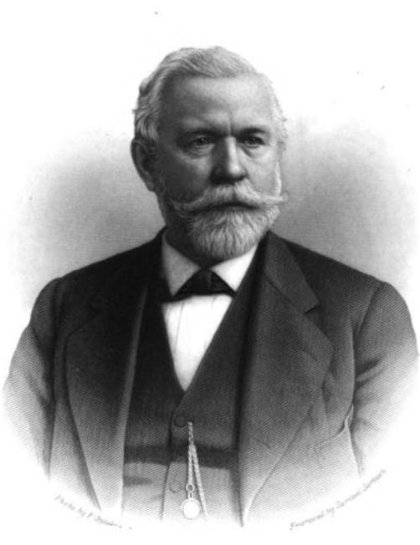
That year — period accounts differ on the month — Sellers presented his paper “A System of Screw Threads and Nuts” to the Institute. America at the time ran on a chaos of threads, with Whitworth’s system the strongest candidate to inherit the continent. Sellers said no — and his argument was not about geometry in the abstract. It was about who gets to make a good screw. The Whitworth form’s rounded crests and roots, the argument ran, demanded formed cutters and specialist gauging — contemporaries put it as needing “three kinds of cutters and two kinds of lathe.” His alternative: open the flanks to 60° — the angle of an equilateral triangle, checkable with the cheapest gauge imaginable — and simply cut the tips flat, one-eighth of the pitch wide. Any competent mechanic on any plain lathe could cut it, and any inspector could check it.
It was standardization for a different civilization: Whitworth had codified the practice of England’s elite workshops; Sellers designed for a continent of ordinary ones, spread across four time zones, that had to make everything locally. The Franklin Institute’s examining committee endorsed the system on 15 December 1864. The U.S. Navy adopted it in 1868, the Master Car-Builders’ Association recommended it for the railroads in 1871, and by the 1880s the “United States Standard” — also called the Sellers or Franklin Institute thread — was exactly that. The English-speaking world now had two thread standards, five degrees apart.
The trap: so close it hurts
Here is what makes the split genuinely dangerous rather than merely annoying: the two systems chose almost identical pitches. Across the whole common range from ¼ to 1½ inches, BSW and UNC disagree on threads-per-inch at exactly one size:
| Nominal size | BSW (tpi) | UNC (tpi) | Threads engage? |
|---|---|---|---|
| 1/4" | 20 | 20 | Yes — but flanks mismatch |
| 5/16" | 18 | 18 | Yes — but flanks mismatch |
| 3/8" | 16 | 16 | Yes — but flanks mismatch |
| 7/16" | 14 | 14 | Yes — but flanks mismatch |
| 1/2" | 12 | 13 | No — binds in a few turns |
| 9/16" | 12 | 12 | Yes — but flanks mismatch |
| 5/8" | 11 | 11 | Yes — but flanks mismatch |
| 3/4" | 10 | 10 | Yes — but flanks mismatch |
| 7/8" | 9 | 9 | Yes — but flanks mismatch |
| 1" | 8 | 8 | Yes — but flanks mismatch |
At every matching size the pitches agree but the flank angles do not — 55° against 60° — so a mixed pair makes contact only on a narrow band of each flank. The joint spins together, torques up, and feels right, while its real clamping capacity, fatigue life, and stripping strength are quietly slashed. The one honest size is ½-inch: 12 tpi against 13, it refuses outright after a few turns. Every other size will happily let you build a weak joint.
The bill arrives: 1939–1945
For eighty years the two standards mostly stayed on their own sides of the Atlantic, and the cost of divergence stayed theoretical. Then the Allies had to fight a mechanized world war with each other’s equipment. The canonical case is the Rolls-Royce Merlin — the engine of the Spitfire, Hurricane, Mosquito and Lancaster. When Packard took the contract to mass-produce Merlins in Detroit, it inherited a fully Whitworth-threaded design in a country where no tool-maker sold Whitworth taps or dies. Packard had to cut its own Whitworth tooling and fasteners in-house so that a Packard-built engine stayed interchangeable with a Derby-built one — and then did it roughly 55,000 times.
Down at the level of the motor pool, the trade literature of the era is full of the same story in miniature: British equipment in North African and European theatres needing 55° fasteners that American and Canadian depots, stocked entirely with 60° hardware, could not supply — serviceable machines waiting on bolts. (No one, then or since, seems to have credibly priced the total cost of the incompatibility; wartime accounts simply call it what it was — a running logistical drag on an alliance that could not afford one.)
1948: the truce in Washington
The fix came in November 1948, when the United States, the United Kingdom and Canada signed the Unified Screw Thread agreement in Washington. It is usually remembered as Britain surrendering — and Britain did give up the 55° angle, adopting Sellers’ 60° for the new common standard. But the fine print records a real two-way compromise: the Unified form took rounded roots — Whitworth’s fatigue-resisting arc, vindicated after a century — onto Sellers’ flat-crested 60° V. The result, codified as UNC and UNF (ASA B1.1–1949), is the inch thread the world still uses.
The historical punchline: within a generation, most of the planet — including, eventually, most of British industry — had moved on again, to the ISO metric thread. Which uses a 60° flank angle and rounded roots. Sellers’ angle, Whitworth’s root: the two men’s compromise, hiding inside every M10 bolt on your car. See our guide to metric vs. standard fasteners for how the systems coexist today.
Where the 55° thread still lives
- Pipe threads, worldwide. BSP and BSPT — the dominant pipe-thread family everywhere outside North America, in plumbing, pneumatics and hydraulics — carry the 55° Whitworth form to this day (ISO 7 / ISO 228). By sheer installed count this is Whitworth’s biggest living legacy.
- Classic British vehicles. Land Rovers, Triumphs, Nortons, BSAs and pre-1970s British machinery generally — BSW and BSF fasteners throughout. Our practical Whitworth guide and the Whitworth spanner size chart cover identification, tools and sourcing.
- Your camera, in spirit. The ¼-20 tripod thread traces to a Royal Photographic Society recommendation from the Whitworth era — though the modern standard is spec’d as ¼-20 UNC. A tiny peace treaty, riding on the bottom of every camera.
Some links below are Amazon affiliate links — as an Amazon Associate we may earn a small commission at no extra cost to you.
Thread pitch gauge set (metric + SAE/Whitworth leaves)
The tool this whole article has been arguing for since 1841: lay the leaf on the thread and read the answer. A set with 55° Whitworth leaves alongside 60° SAE/metric is the one that ends mystery-bolt roulette on older machines.
Nut-and-bolt thread checker (UNC/UNF + metric)
A gauge plate of threaded studs and nuts — spin the mystery fastener on until one fits. Faster than gauges for whole-bolt identification, and it will refuse a BSW bolt at the ½-inch station exactly as this article promised.
Frequently asked questions
Why is the Whitworth thread angle 55 degrees?
Because that was, in effect, the average of England. Whitworth collected sample bolts from the principal workshops of the country in the late 1830s and averaged their proportions rather than deriving an ideal form from theory. The mean flank angle came out close to 55°, and he fixed it there for every size.
Why did America reject Whitworth’s thread?
Manufacturability. William Sellers argued in 1864 that Whitworth’s rounded crests and roots required formed cutters and specialist gauging, while a 60° angle — an equilateral triangle — with flat tips could be cut by any mechanic on a plain lathe and checked with a simple gauge. For a rapidly industrializing continent, easy-to-make beat theoretically-elegant.
Are Whitworth (BSW) and UNC threads interchangeable?
They will often assemble — most sizes share the same threads-per-inch — but they should never be mixed in service. The 55° and 60° flanks contact only on a small band, so the joint loses much of its clamping and fatigue strength while feeling tight. The exception is ½-inch (BSW 12 tpi vs UNC 13 tpi), which binds after a few turns and won’t assemble at all.
Is the Whitworth thread still used today?
Yes — mostly as BSP/BSPT pipe threads, which keep the 55° form and remain the standard pipe threads across most of the world. You’ll also meet BSW/BSF on classic British cars, motorcycles and machinery built before the 1970s.
What replaced Whitworth and Sellers threads?
The 1948 Unified standard (UNC/UNF) merged the two inch systems — Sellers’ 60° angle with Whitworth-style rounded roots — and ISO metric later swept most of the world using the same combination. Both men’s ideas survive inside every modern bolt.
Keep going
Bottom line: Whitworth standardized what England already did; Sellers standardized what America could easily do. Both were right for their worlds, the five degrees between them cost the Allies dearly, and the 1948 Unified thread — Sellers’ angle on Whitworth’s roots — is the treaty both men would recognize as a draw.