Stripped Spark Plug Thread Repair: Helicoil vs. TimeSert vs. Rethreader
Stripped spark plug threads in an aluminum head? Learn when to use a thread chaser, Helicoil wire insert, or TimeSert solid insert — with step-by-step process and the right tools for each method.

Stripped spark plug threads are more common than most people expect. Aluminum cylinder heads — standard on virtually every modern engine — are soft enough that overtorquing, cross-threading, or simply years of thermal cycling can destroy the threads in the bore. When a spark plug won't torque down or starts spinning freely, panic sets in fast.
The good news: in the vast majority of cases you can repair the threads in the car, with the engine in the vehicle, in a couple of hours. The bad news: there are three meaningfully different repair methods on the market, they are not all equal, and using the wrong one can turn a $50 repair into a cylinder head replacement.
This guide covers the three main approaches — thread chaser (rethreading), Helicoil, and TimeSert — with a direct comparison, step-by-step process for each, and the specific scenarios where each one belongs.
Damaged spark plug threads in an aluminum cylinder head — a repairable situation in most cases, but the method matters.
How spark plug threads strip — and what you're actually dealing with
Understanding the failure mode determines which fix is appropriate.
Most spark plug bores in modern engines are M14×1.25 (14 mm diameter, 1.25 mm pitch). A small number of applications use M12×1.25 (Honda, some small engines) or 18 mm (older engines). Before you buy any repair kit, confirm your thread spec — kits are thread-specific and not interchangeable.
Stripping happens in three patterns, each with different severity:
- Partial damage / cross-threading. One or two threads are damaged but the majority are intact. The plug will start but won't torque properly. This is the best case — often fixable with a thread chaser alone.
- Overtorque strip-out. Several threads have sheared or deformed from over-tightening. The plug either won't seat at all or torques to zero resistance. Requires a proper insert (Helicoil or TimeSert).
- Blow-out. The plug has physically blown out of the bore under combustion pressure, carrying threads with it. Classically associated with Ford Triton 2-valve V8s (4.6L, 5.4L). Requires a specialized blow-out repair kit — different from a standard thread insert.
Method 1 — Thread chaser / rethreader (the quick fix)
Best for: minor cross-threading or galled threads where the bore is basically intact.
A spark plug thread chaser looks like a spark plug with hardened steel cutting edges instead of a ceramic insulator. You run it into the bore by hand (never with an impact), and it reshapes deformed aluminum threads back to spec without removing material. It's a cleanup tool, not a repair for missing threads.
When it works:
- The plug was cross-threaded and galled the threads but didn't shear them.
- Carbon buildup is preventing proper seating.
- The plug torques, but higher than expected resistance made you nervous.
When it won't work:
- Threads are sheared off or missing. A chaser can't replace material.
- The plug spins freely with zero resistance — there's nothing left to reshape.
- Blow-out scenario.
Process:
- Bring the piston to BDC (bottom dead center) on that cylinder so debris falls away from the valves.
- Pack the chaser threads with grease to catch aluminum shavings.
- Thread the chaser in by hand, slowly. Never use a ratchet or impact.
- Back out every half-turn to clear debris.
- Remove, clean the bore thoroughly with compressed air and a rag.
- Install a new spark plug with fresh anti-seize on the threads.
Lisle 65600 Spark Plug Thread Chaser
The go-to thread chaser for M14×1.25 aluminum heads. Reshapes deformed threads without removing material. Always the first step before committing to a full insert repair — if the threads are intact enough to chase, you can skip the drill-out entirely.
Method 2 — Helicoil (wire insert)
Best for: stripped threads where original bore material is damaged but intact — especially on a budget.
A Helicoil is a coiled stainless steel wire insert. The process involves drilling out the damaged bore slightly oversize, tapping new threads at the larger diameter, and threading in the coil. The inside of the coil returns the bore to the original M14×1.25 spec, so your standard spark plug fits normally.
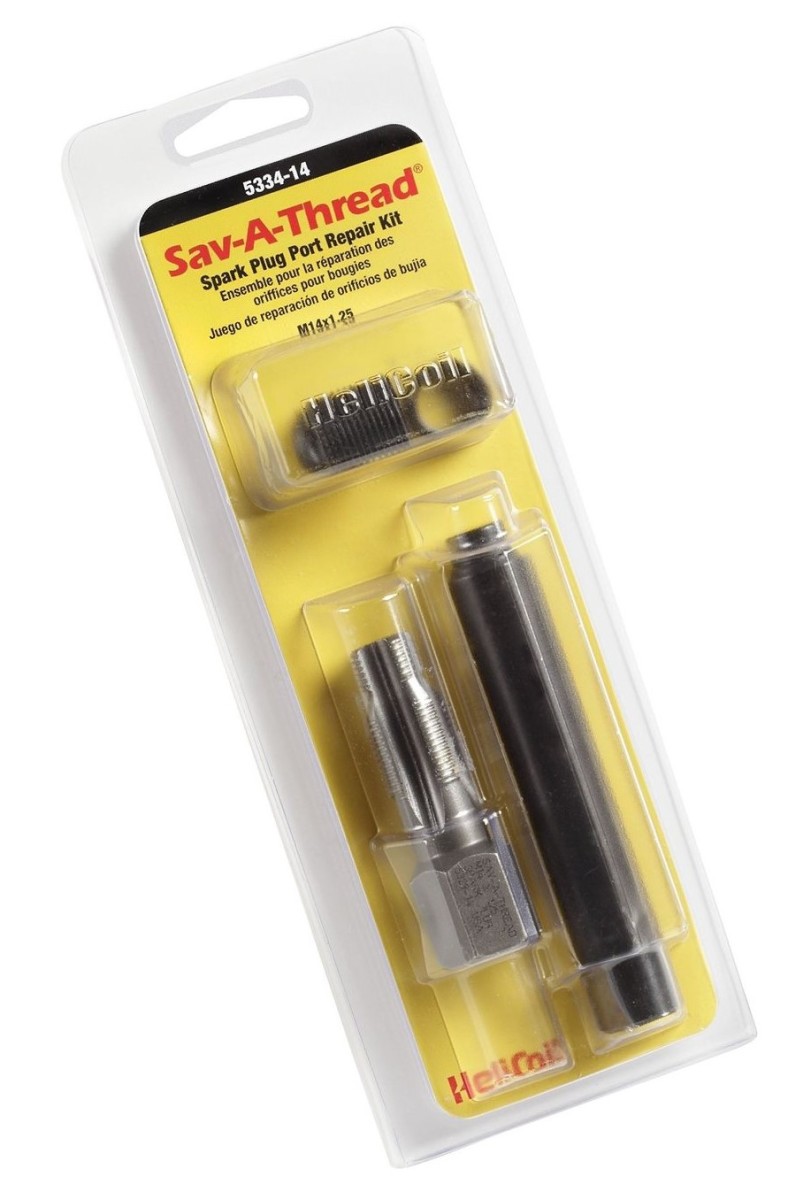
A Helicoil repair in progress — the wire insert restores the original M14×1.25 thread spec after the bore has been drilled out and retapped.
Pros:
- Widely available and less expensive than TimeSert kits.
- Stainless insert is harder than the surrounding aluminum — the repaired thread resists future stripping.
- The standard method for most DIY repairs.
Cons:
- The coil can unwind or back out if not installed correctly, especially on blow-out scenarios with damaged bore walls.
- Drilling accuracy matters: off-axis drilling ruins the repair. A drill guide is essential.
- Not recommended for Ford Triton blow-outs where the bore wall is compromised.
Process overview:
- Bring piston to BDC. Pack the bore with grease to catch chips.
- Using the kit's drill guide (mandatory — do not freehand this), drill the bore to the specified oversize.
- Tap new threads with the supplied tap. Use cutting fluid.
- Thread the Helicoil insert in using the insertion tool until the top of the coil sits one half-turn below the bore surface.
- Break off the installation tang with the punch tool.
- Clean the bore, install new plug with anti-seize.
Helicoil 5546-14 Spark Plug Thread Repair Kit — M14×1.25
The original Helicoil kit for M14×1.25 spark plug threads. Includes drill, tap, insertion tool, and wire inserts. The correct choice for most stripped spark plug repairs that don't involve a Ford Triton blow-out.
Method 3 — TimeSert (solid thread insert)
Best for: severe strip-out, Ford Triton blow-outs, or any repair where you need maximum strength.
A TimeSert is a solid steel threaded bushing rather than a wire coil. It threads into an oversized tapped bore and locks itself in place — the bottom of the insert expands outward as the plug is tightened the first time, anchoring it permanently. The inside is machined to the original M14×1.25 spec.

The TimeSert 4412 kit — solid steel inserts that self-lock on first installation, providing a permanent, production-quality repair.
Pros:
- Solid insert cannot back out or unwind. Once installed and locked, it's essentially permanent.
- Superior repair for Ford Triton plug blow-outs — the solid construction engages compromised bore walls better than a wire coil.
- Often described as an OEM-grade repair. Many professional shops use TimeSert exclusively.
- The locking mechanism triggers automatically when the spark plug is first torqued.
Cons:
- More expensive than Helicoil kits.
- Requires more precise drilling — the counterbore step demands the right depth. The kit includes a stop to prevent over-drilling.
- Harder to find at local auto parts stores; usually an online or specialty tool purchase.
Process overview:
- Bring piston to BDC. Apply grease to catch chips.
- Drill the bore to the specified size using the kit's drill guide.
- Counterbore the top of the bore with the supplied counterbore tool — this creates the seat for the insert's flange.
- Tap the bore with the supplied tap.
- Thread the insert in by hand until it bottoms. The flange should sit flush.
- Install the spark plug to spec. The first torque-down locks the insert permanently.
Time-Sert 4412 Spark Plug Thread Repair Kit — M14×1.25
The professional-grade choice for stripped spark plug threads. Solid steel insert locks permanently on first torque-down. Recommended for Ford Triton blow-outs and any repair where longevity matters over cost.
Helicoil vs TimeSert: which should you use?
A direct comparison across the factors that matter for a DIY repair decision.
| Factor | Thread chaser | Helicoil | TimeSert |
|---|---|---|---|
| Cost (approx.) | $15–$30 | $25–$60 | $80–$150 |
| Insert type | None (reshapes) | Wire coil (SS) | Solid bushing (steel) |
| Drilling required? | No | Yes | Yes + counterbore |
| Locking mechanism | N/A | Tang engagement | Self-locking on first torque |
| Insert-back-out risk | N/A | Low (if installed correctly) | None once locked |
| Ford Triton blow-out | Not suitable | Not recommended | Preferred |
| Skill level | Beginner | Intermediate | Intermediate |
| Availability | Auto parts stores | Auto parts / online | Online / specialty |
The short answer: if your budget allows and the damage is anything more than cosmetic, buy the TimeSert. You will do the repair once and never think about it again. If you are on a strict budget and the bore wall is in good shape, a correctly installed Helicoil is a perfectly acceptable repair. Use the thread chaser first regardless of which insert path you choose — it cleans the bore before you drill and often reveals how bad the damage actually is.
How to avoid stripping spark plug threads
The repair is satisfying, but prevention is easier. The three causes of stripped spark plug threads are overtorquing, cross-threading, and dry installation in aluminum.
- Always use a torque wrench. Spark plugs in aluminum heads torque to 13–20 ft-lb depending on the application. That is lighter than most people expect. “Snug plus a quarter turn” is not a substitute for a calibrated reading.
- Thread plugs in by hand first. If you feel any resistance before the plug seats, back it out and start over. Cross-threading is almost always caused by using a socket before confirming the plug is running true.
- Use anti-seize on the threads — but only a thin coat. Anti-seize reduces the friction coefficient, which means you reach the clamp load at a lower torque reading. Refer to the plug manufacturer's guidance — some plugs (NGK, for instance) are shipped with a pre-applied coating and specify no additional anti-seize.
- Replace plugs at the correct interval. Plugs left too long seize to aluminum heads due to galvanic corrosion. A seized plug that is forced out takes threads with it. Apply a shot of penetrating oil and let it soak if a plug is reluctant to move.
Tools you need for any spark plug thread repair
Have these ready before you start — stopping mid-repair to source a missing tool creates problems.
Spark Plug Thread Chaser — M14×1.25
Run this before committing to any insert repair. Cleans and reshapes minor damage, and definitively tells you whether you need to drill. Takes 5 minutes and can save you 2 hours.
Helicoil 5546-14 Spark Plug Thread Repair Kit
The standard wire-insert repair for stripped aluminum spark plug bores. Correct choice for most everyday strip-out situations on non-Triton engines. Always use the included drill guide.
Time-Sert 4412 Spark Plug Thread Repair Kit
Solid steel insert with self-locking mechanism. The right choice for Ford Triton blow-outs, severe strip-outs, or any job where you want a permanent OEM-grade result.
As an Amazon Associate, WhatSizeBolt earns from qualifying purchases on the links above.
Related reading
- Common Fastener Problems and How to Fix Them — the full guide to stripped, seized, and broken fasteners.
- How to Drill Out a Broken Bolt — the same drilling discipline applies to spark plug bore repair.
- Torque Specifications Guide — how to look up and apply the correct torque value for your application.
- Oil vs Anti-Seize: When to Use Each — whether to use anti-seize on spark plug threads and how it affects torque readings.
Repaired the threads and need to confirm your spark plug torque spec? Use our fastener lookup to find the OEM torque value for your vehicle.